Best Vitamin C Serums in India: A Beginner Buying Guide
Vitamin C serums are everywhere. You may have heard that they can brighten dull-looking skin, improve the appearance of uneven skin tone, support collagen, and make your skin look healthier over time.
But choosing one can feel confusing.
Should you buy 10%, 15%, or 20%? Is pure vitamin C better than a derivative? Does it work for oily skin? Can men use it? Should you apply it in the morning or at night?
The good news is that you do not need the strongest or most expensive serum to begin. A simple, stable vitamin C product that suits your skin type and that you can use consistently is usually a better choice than a high-strength product that irritates your skin.
This beginner buying guide will help you understand what vitamin C does, what to look for on the label, which type may suit your skin, and how to start safely.
This article is for general skincare education only and is not medical advice. If you have severe acne, eczema, rosacea, melasma, painful breakouts, persistent irritation, or a diagnosed skin condition, consult a dermatologist before adding active skincare products.
Affiliate Disclosure
Affiliate Disclosure: This article may contain affiliate links. If you purchase through these links, Nutri Bloom Wellness may earn a small commission at no additional cost to you. Product formulas, prices, sellers, availability, and ingredients can change. Always check the current product label, expiry date, directions, and suitability for your skin before buying.
What does vitamin C serum do?
Vitamin C is an antioxidant. In skincare, it is commonly used to support the skin against environmental stress, improve the look of dullness, and help create a brighter, more even-looking complexion over time.
It is also involved in collagen production, which is why vitamin C is often included in routines focused on early signs of skin ageing and uneven-looking texture. Dermatology guidance commonly recommends pairing topical vitamin C with sunscreen in the morning because vitamin C provides antioxidant support, while sunscreen remains the product that protects skin from UV exposure.
Vitamin C may be useful if you want to address:
- Dull-looking skin
- Uneven-looking skin tone
- The appearance of dark spots or post-acne marks
- Early fine lines
- General skin brightness
- Environmental stress from sunlight and pollution
However, vitamin C is not an overnight treatment. It works best as part of a consistent routine that includes gentle cleansing, moisturizer, and daily sunscreen.
Is vitamin C serum for men or women?
Vitamin C serum is for all genders.
Skin type, sensitivity, climate, daily sun exposure, shaving habits, acne tendency, and personal skincare goals matter far more than whether the product is marketed for men or women.
Men with oily skin, acne marks, dullness, post-shave irritation, or sun exposure can use vitamin C. Women with similar concerns can use it too. The right product depends on your skin’s tolerance and your overall routine.
Do not choose a serum only because the packaging says “for men” or “for women.” Read the ingredient list, vitamin C type, concentration, packaging, and directions instead.
What type of vitamin C should beginners choose?
Not all vitamin C serums are the same. The vitamin C form inside the formula matters because it affects strength, stability, and irritation risk.
L-ascorbic acid: the strongest and most researched form
L-ascorbic acid is the pure form of vitamin C. It is widely studied and can be effective, but it may sting or irritate sensitive skin because it generally needs a lower pH to work well.
For beginners, a 5–10% or 10% L-ascorbic acid formula can be a sensible starting point if your skin is not very reactive. Higher concentrations are not automatically better. If your face burns, becomes very red, peels, or develops persistent irritation, the formula may be too strong for you.
Vitamin C derivatives: gentler beginner options
Vitamin C derivatives are modified forms designed to be more stable or gentler. Common examples include:
- Ethyl ascorbic acid
- Sodium ascorbyl phosphate
- Magnesium ascorbyl phosphate
- Ascorbyl glucoside
These can be a good choice if you have sensitive, dry, or easily irritated skin. They may work more gradually than pure L-ascorbic acid, but slow and consistent is often better than strong and irritating.
Some beginner-friendly Indian formulations use 10% vitamin C derivatives paired with ingredients such as niacinamide or centella to make the formula feel more comfortable.
What strength of vitamin C serum should you start with?
For most beginners, start with a lower-to-moderate strength.
| Skin situation | Beginner-friendly starting point | What to avoid initially |
|---|---|---|
| Normal or combination skin | 10% vitamin C serum | Starting immediately with 20% |
| Oily or acne-prone skin | 5–10% lightweight serum | Heavy oily textures or multiple active products at once |
| Dry skin | Gentle derivative formula plus moisturizer | Strong low-pH formula without moisturizer |
| Sensitive or reactive skin | 5–10% derivative formula, patch tested | High-strength pure L-ascorbic acid |
| Experienced vitamin C user | 10–15% if skin tolerates it | Changing multiple actives at the same time |
A 10% formula is commonly suggested as a comfortable starting point for beginners and sensitive skin, while higher strengths should be approached more carefully.
Remember: a serum that you can use consistently for three months is more useful than a high-strength product you stop after one week because it burns.
How to choose a vitamin C serum in India
Before buying, look beyond the marketing words “glow,” “brightening,” or “radiance.”
1. Check the vitamin C concentration
If you are new, look for a 5–10% or 10% vitamin C product.
Do not assume that 20% is automatically twice as effective as 10%. Higher concentrations may be more irritating, especially when you are also using acids, retinol, acne treatments, or harsh cleansers.
2. Look at the vitamin C form
- Choose L-ascorbic acid if you want the most researched pure form and your skin tolerates actives well.
- Choose a derivative if you want a gentler or more stable option.
- If a brand does not clearly state the vitamin C type or concentration, be cautious.
3. Choose stable packaging
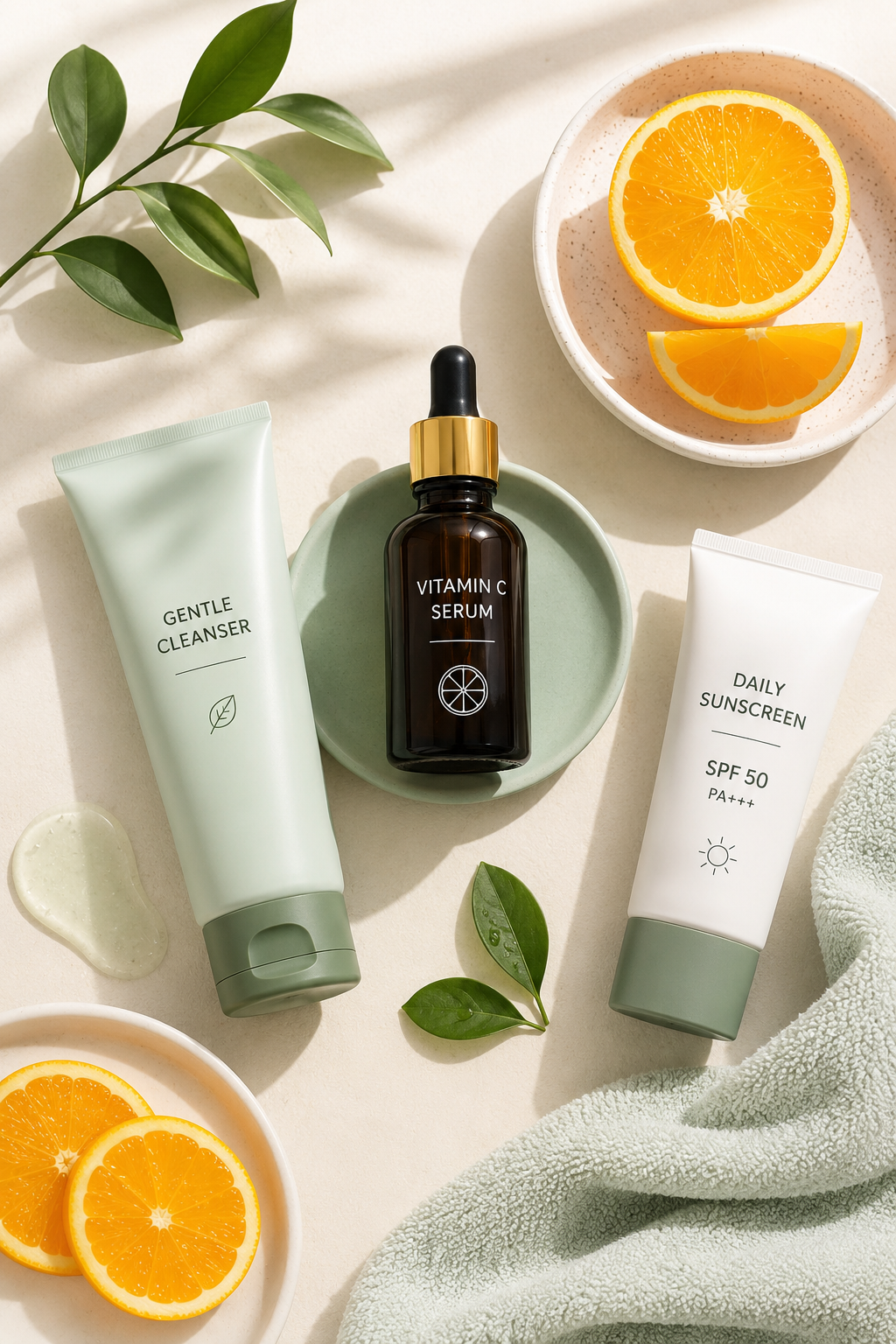
Vitamin C can become less effective when it is repeatedly exposed to light and air.
Look for:
- Opaque bottles
- Dark amber or tinted glass bottles
- Airless pump packaging
- A tightly closing cap
- A formula that does not turn dark yellow, orange, or brown quickly
Opaque or airless packaging helps protect the serum from light and air exposure. If your serum changes colour significantly, develops an unusual smell, or becomes darker over time, stop using it and check the brand’s guidance.
4. Keep the ingredient list simple
A beginner does not need vitamin C plus five strong acids plus retinol plus fragrance in one bottle.
Helpful supporting ingredients may include:
- Niacinamide
- Hyaluronic acid
- Glycerin
- Vitamin E
- Ferulic acid
- Centella asiatica
- Panthenol
But if your skin is sensitive, a simple formula with fewer potential irritants may be easier to tolerate.
5. Consider your skin type and texture preference
- Oily skin: Lightweight, water-based, non-greasy formula
- Dry skin: Hydrating formula followed by a moisturizer
- Combination skin: Lightweight serum plus gel-cream moisturizer
- Sensitive skin: Lower concentration, fragrance-free where possible, patch tested first
- Acne-prone skin: Lightweight formula and a simple routine; do not layer too many actives together
Vitamin C serum categories for beginners
This section helps you choose a type of serum. It is more useful than blindly copying a product name because formulas and availability can change.
Best type for complete beginners
Choose a 10% vitamin C derivative serum with a simple, lightweight formula.
This type is ideal if you have never used active skincare before and want to target dullness or uneven-looking tone without immediately using a strong product.
Look for a formula that feels comfortable, has transparent ingredient information, and comes in stable packaging.
Best type for oily or acne-prone skin
Choose a lightweight 5–10% or 10% water-based formula.
Avoid heavy oils if they do not suit your skin. Keep your routine minimal: gentle cleanser, vitamin C serum, light moisturizer if needed, and sunscreen.
If you are dealing with painful acne, cystic acne, or sudden severe breakouts, do not try to solve it with multiple serums. See a dermatologist.
Best type for dry or dull-looking skin
Choose a hydrating vitamin C derivative or a gentle 10% formula with ingredients such as glycerin, hyaluronic acid, or panthenol.
Follow with a moisturizer immediately so your skin does not feel tight or dry.
Best type for sensitive skin
Choose a low-strength derivative formula, ideally 5–10%, and patch test first.
Use it every other morning for the first two weeks. If your skin stays calm, you can slowly increase to daily use.
Best type for experienced active-skincare users
A 10–15% L-ascorbic acid formula may be an option if your skin already tolerates active ingredients well.
Even then, introduce only one new product at a time. Do not start a high-strength vitamin C serum during the same week you begin retinol, chemical exfoliation, or a strong acne treatment.
How to use vitamin C serum correctly
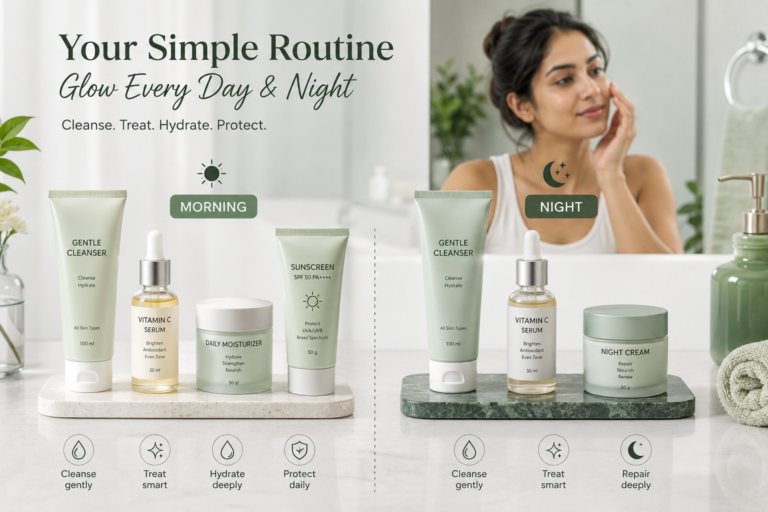
For most people, vitamin C fits best in a morning routine.
Simple morning routine order
- Gentle cleanser or water rinse
- Vitamin C serum
- Moisturizer, if needed
- Broad-spectrum sunscreen
Sunscreen should always be the final step in the morning. Vitamin C can complement sun protection, but it does not replace sunscreen.
How much should you use?
Use 2–4 drops, depending on the product directions. Spread it gently across clean, dry or slightly damp skin. Do not overuse it. More serum does not mean better results.
Give the serum around 30–60 seconds to settle before you apply moisturizer and sunscreen.
How often should beginners use it?
Start slowly:
- Week 1–2: Every other morning
- Week 3 onward: Daily morning use if your skin feels comfortable
- If you develop burning, itching, persistent redness, swelling, or peeling: stop using it and simplify your routine
Patch testing on a small area, such as behind the ear or on the inner forearm, and waiting around 48 hours can help you identify obvious irritation before applying a new active product across your face.
Can you use vitamin C with niacinamide?
Yes, many people can use vitamin C and niacinamide in the same routine.
You can:
- Use a vitamin C serum that already includes niacinamide
- Apply vitamin C first, wait briefly, then use niacinamide if your skin is comfortable
- Use vitamin C in the morning and niacinamide at night if you prefer a simpler routine
If you have sensitive skin, do not introduce both products in the same week. Start with one, use it consistently for two weeks, then decide if you need the other.
Skincare does not need to be complicated. A simple routine you tolerate is better than trying to layer every trending ingredient.
What should you avoid mixing with vitamin C at first?
You do not have to avoid every other active ingredient forever. But when you are new to vitamin C, avoid overwhelming your skin by starting several strong products together.
Be cautious about using vitamin C in the same routine as:
- Strong exfoliating acids
- Retinol or retinoids
- Benzoyl peroxide
- Physical face scrubs
- Multiple strong serums at once
A simple beginner approach is:
- Morning: Vitamin C + moisturizer + sunscreen
- Night: Gentle cleanser + moisturizer
- Add other actives only after your skin feels stable
If you already use prescription acne treatments or have a dermatologist-designed routine, follow your dermatologist’s advice instead.
Common vitamin C serum mistakes
Buying the highest percentage first
A higher concentration is not always a better choice. Strong formulas can irritate your skin and make you quit the routine entirely.
Skipping sunscreen
Vitamin C supports your morning routine, but sunscreen is still essential. If you are targeting dullness or dark spots but skipping sunscreen, you may not see the improvement you expect.
Using oxidised serum
If a vitamin C product becomes deep yellow, orange, or brown, it may have oxidised. Check the packaging, storage instructions, and expiry date. Do not keep a serum in direct sunlight or a hot, humid area.
Applying too much
Two to four drops are normally enough. Applying half a dropper will not speed up results and may create stickiness or irritation.
Adding too many products at once
Vitamin C, retinol, exfoliating acids, acne medication, and harsh scrubs all at once can damage your skin barrier. Introduce one product at a time.
Expecting an instant glow
Skincare takes time. Give a simple routine at least 6–12 weeks of consistent use before judging whether it suits you.
Frequently asked questions
Can beginners use vitamin C serum every day?
Yes, many beginners can eventually use a gentle vitamin C serum daily. However, start every other day for the first one to two weeks and increase only if your skin stays comfortable.
What percentage of vitamin C is best for beginners?
A 5–10% or 10% formula is a sensible starting point for most beginners. This range offers a balance between usefulness and lower irritation risk compared with jumping directly to high-strength formulas.
Is vitamin C serum good for acne marks?
Vitamin C may help improve the appearance of uneven tone and post-acne marks over time, especially when paired with daily sunscreen. It is not a guaranteed treatment for acne scars, and deep scars or active painful acne may require dermatology care.
Can men use vitamin C serum?
Yes. Vitamin C serum can be used by men and women. Choose according to your skin type, sensitivity, texture preference, and skincare goals.
Should I use vitamin C serum in the morning or at night?
Morning use is common because vitamin C can provide antioxidant support during daytime exposure, but sunscreen must always be applied afterward.
Can vitamin C make skin darker?
Vitamin C should not make your skin darker when the product is stable and used appropriately. However, irritation, sun exposure without sunscreen, or using an oxidised product can make skin concerns worse for some people. Stop using any product that causes persistent irritation and consult a dermatologist if needed.
Final thoughts
The best vitamin C serum is not always the one with the biggest percentage, the prettiest packaging, or the loudest “glow” promise.
For most beginners, choose a stable 5–10% or 10% serum, introduce it gradually, keep the rest of your routine simple, and wear sunscreen every morning.
Consistency is what creates progress. Start gently, protect your skin, and give your routine time to work.