Morning vs Night Skincare Routine: What’s the Difference?
If you have ever wondered why people use vitamin C in the morning, retinol at night, or why sunscreen is not optional during the day, you are not alone.
Skincare can feel confusing because social media often makes it look like you need ten products for glowing skin. But the truth is much simpler: your skin has different needs in the morning and at night.
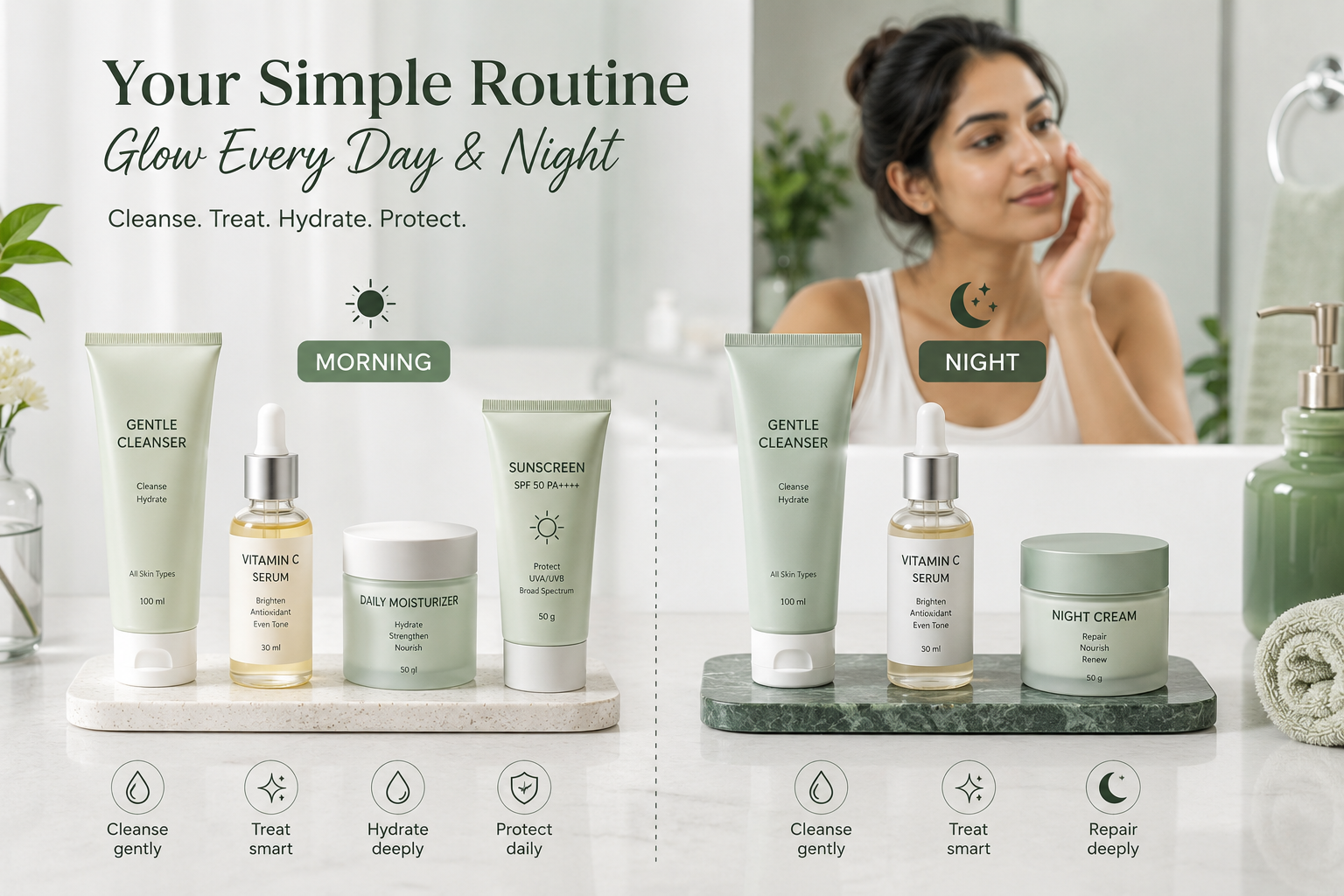
Your morning skincare routine is mainly about protecting your skin from sunlight, pollution, heat, sweat, and daily environmental stress. Your night skincare routine is mainly about removing the day’s buildup, supporting your skin barrier, and using targeted treatments carefully.
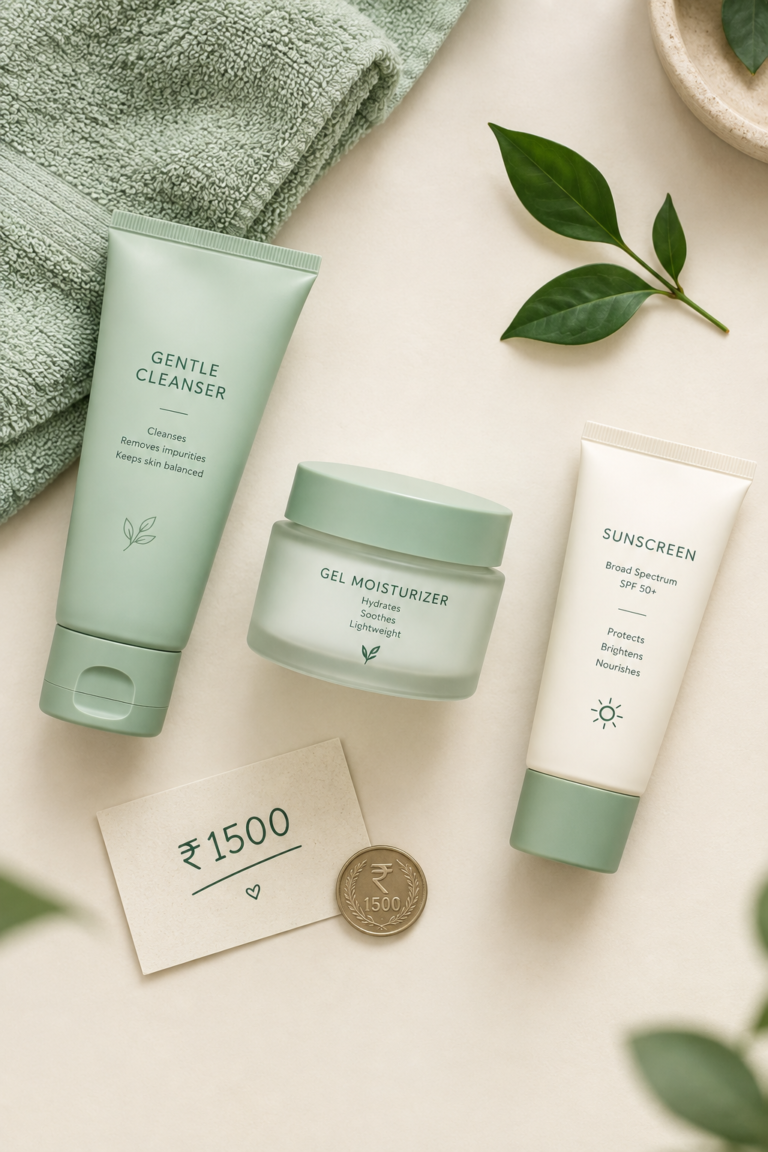
You do not need a complicated routine to begin. A gentle cleanser, a moisturizer that suits your skin, and sunscreen in the morning can already make a real difference. At night, cleansing and moisturizing are the basics; treatments such as retinol, exfoliating acids, or acne products should only be added slowly and with a clear purpose.
This article is for general education only and is not medical advice. If you have severe acne, eczema, rosacea, persistent irritation, dark patches that are worsening, or another skin concern, please consult a dermatologist.
Affiliate Disclosure
Affiliate Disclosure: This article may contain affiliate links. If you purchase through these links, I may earn a small commission at no extra cost to you. I only recommend products that I would be comfortable suggesting to a close friend. Product formulas, prices, and availability can change, so always check the current ingredient list and use instructions before buying.
Morning versus night skincare: the simple difference
| Routine | Main Goal | Essential Steps | Optional Add-Ons |
|---|---|---|---|
| Morning (AM) | Protect skin from UV, pollution, and daily exposure | Cleanser or water rinse, moisturizer, sunscreen | Vitamin C, niacinamide, hydrating serum |
| Night (PM) | Remove sunscreen/makeup and support recovery | Cleanser, moisturizer | Retinoid, acne treatment, exfoliant, hydrating serum |
A good routine is not about using more products. It is about using the right products at the right time and giving your skin enough consistency to respond. Sunscreen belongs at the end of your morning routine; at night, replace sunscreen with cleansing, a suitable treatment if needed, and moisturizer.
Your simple morning skincare routine
Your morning routine should be quick, gentle, and focused on protection.
Step 1: Cleanse gently—or rinse with water
In the morning, your skin may have light oil, sweat, and residue from nighttime products. If you have oily or acne-prone skin, use a gentle cleanser.
If your skin is dry, sensitive, or feels tight easily, a splash of lukewarm water may be enough on some mornings. Avoid harsh face washes that leave your skin squeaky clean, dry, or uncomfortable. Over-cleansing can disrupt the skin barrier and sometimes trigger more irritation or oiliness.
Affiliate link spot: If you recommend products, link the phrase “gentle cleanser for oily or acne-prone skin” to your future face-wash roundup.
Step 2: Apply a serum if you need one
A serum is optional. You do not need one just because everybody online uses one.
If you have a specific goal, you may choose one simple serum:
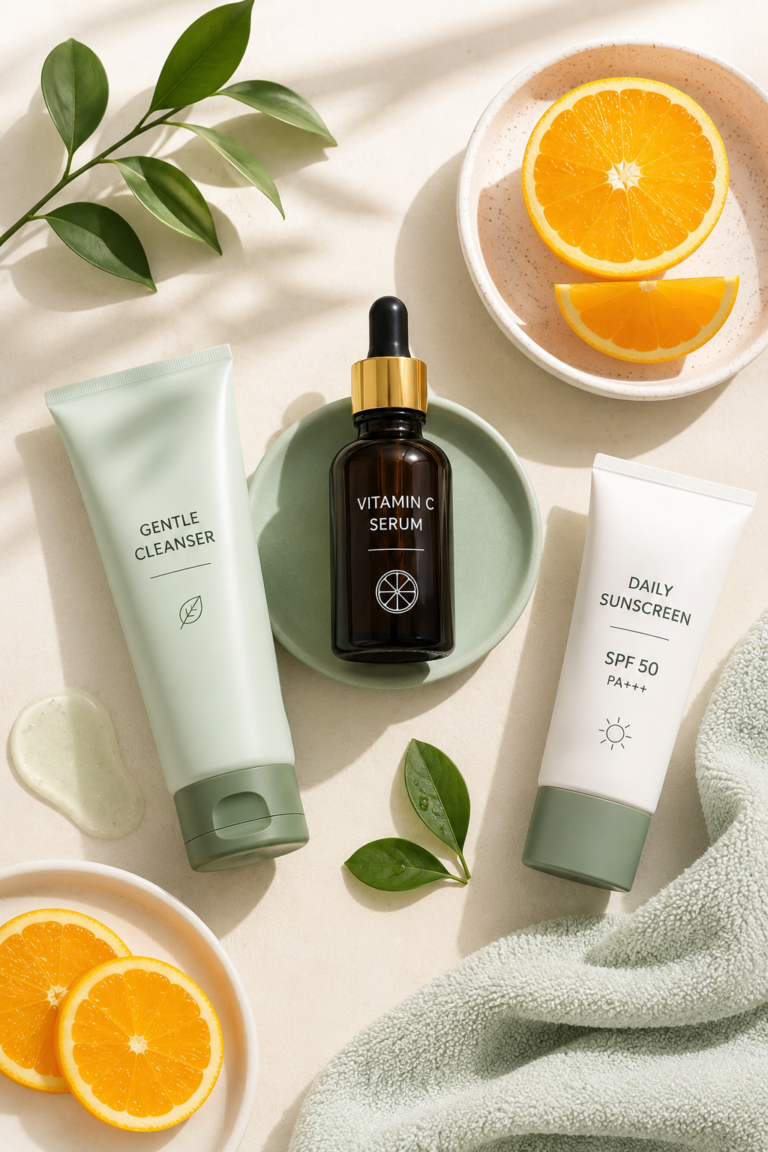
- Vitamin C: Often used in the morning for antioxidant support, dullness, and uneven-looking skin tone.
- Niacinamide: Can be used morning or night and may suit people who want barrier support, oil control, or a more even-looking complexion.
- Hyaluronic acid: Helpful for hydration, especially if your skin feels dry or dehydrated.
Use only one new active product at a time. Start 2–3 times per week if your skin is sensitive, and stop if you experience burning, swelling, persistent redness, or a rash..
Step 3: Moisturize
Moisturizer is useful for every skin type—including oily skin.
The goal is to support your skin barrier and reduce dryness, tightness, or irritation. Choose texture based on your skin:
- Oily skin: Lightweight gel or gel-cream moisturizer
- Combination skin: Gel-cream or light lotion
- Dry skin: Cream moisturizer with barrier-supporting ingredients
- Sensitive skin: Simple fragrance-free moisturizer where possible
Apply moisturizer on slightly damp skin if that feels comfortable for you.
Step 4: Sunscreen—your most important morning step
Sunscreen is the final step in your morning skincare routine.
Choose a broad-spectrum sunscreen with at least SPF 30. Broad-spectrum means protection from both UVA and UVB rays. Apply it generously to your face, neck, ears, and any other exposed skin. If you are outdoors, sweating, swimming, or exposed to strong daylight for long periods, reapply according to the product directions—often every two hours.
Think of sunscreen as protection for the progress you are trying to make with all your other skincare products. If you are using vitamin C, retinol, exfoliants, or dark-spot treatments but skipping sunscreen, you may not get the results you expect.
Your simple night skincare routine
Nighttime is when you remove the sunscreen, makeup, sweat, oil, and pollution that collected on your skin during the day.
The basics are simple: cleanse and moisturize. Treatments are optional.
Step 1: Remove makeup and sunscreen
If you wear makeup, water-resistant sunscreen, or heavy sunscreen, consider a first cleanse with:
- Micellar water
- Cleansing balm
- Cleansing oil
Then follow with a gentle water-based cleanser.
This is called double cleansing. It is useful when you need to properly remove makeup or stubborn sunscreen, but it is not compulsory every night for everyone. If you wore light sunscreen and no makeup, one gentle cleanse may be enough.
Step 2: Add one treatment product if needed
Night is usually the best time for treatment products because you are not immediately exposing your skin to daylight.
However, do not use every treatment at once. Choose one concern and introduce one product slowly.
For acne or clogged pores
A salicylic acid product may be useful for some acne-prone skin types. Begin with a low strength and use it only a few times per week, not daily from the first night.
For texture, acne marks, and early signs of ageing
Retinoids, including retinol, are generally used at night because they can increase sun sensitivity and may degrade with sunlight. Beginners should start gradually, such as 1–2 nights per week, use only a pea-sized amount for the full face, and wear sunscreen the next morning.
For dull or dehydrated skin
A hydrating serum with ingredients such as hyaluronic acid, glycerin, or niacinamide may be used before moisturizer.
Important: Do not combine retinol with strong exfoliating acids on the same night when you are a beginner. Too many active ingredients can irritate your skin barrier.
Step 3: Moisturize and support your skin barrier
Finish with a moisturizer that feels comfortable.
At night, some people prefer a slightly richer cream, especially if they have dry, sensitive, or irritated skin. If your skin is oily, a light gel moisturizer may still be perfect.
The purpose of this final step is to reduce moisture loss and support the skin barrier while you sleep. Ceramides, glycerin, hyaluronic acid, and simple barrier-supporting formulas are common ingredients to look for.
Correct skincare order: AM and PM
Here is the simple order to remember.
Morning routine order
- Cleanser or water rinse
- Optional serum
- Moisturizer
- Sunscreen
Night routine order
- Makeup remover or cleansing oil, if needed
- Gentle cleanser
- Optional treatment serum
- Moisturizer
A general rule is to layer from lighter, water-based textures to thicker creams. Sunscreen is always the last step in the morning.
Skincare routine by skin type
Oily or acne-prone skin
Morning
- Gentle gel cleanser
- Niacinamide or simple hydrating serum, if desired
- Lightweight gel moisturizer
- Non-comedogenic sunscreen
Night
- Cleanser
- Salicylic acid 2–3 nights per week, if suitable
- Lightweight moisturizer
Avoid scrubbing your face every day or trying to dry out pimples with harsh products. Oily skin still needs hydration and barrier support.
Dry skin
Morning
- Rinse with water or use a gentle cream cleanser
- Hydrating serum, if desired
- Cream moisturizer
- Sunscreen
Night
- Gentle cleanser
- Hydrating serum
- Richer moisturizer
If your skin feels dry, tight, flaky, or stings after cleansing, simplify your routine and use fewer active ingredients.
Combination skin
Morning
- Gentle cleanser
- Optional niacinamide serum
- Light gel-cream moisturizer
- Sunscreen
Night
- Gentle cleanser
- One suitable treatment if needed
- Gel-cream or lightweight moisturizer
You do not necessarily need separate products for your forehead and cheeks. Start with a balanced, simple routine and adjust only if needed.
Sensitive skin
Morning
- Water rinse or a very gentle cleanser
- Simple fragrance-free moisturizer
- Mineral or gentle sunscreen that you tolerate
Night
- Gentle cleanser
- Basic moisturizer
- Add active ingredients only after your skin feels stable
Patch-test new products and introduce only one new product at a time.
Common morning and night skincare mistakes
Using too many products at once
A ten-step routine is not automatically better. Combining vitamin C, retinol, exfoliating acids, scrubs, acne treatments, and multiple serums can overwhelm your skin and cause redness, dryness, breakouts, or stinging.
Start with basics first. Add one new product only when your skin is comfortable with the current routine.
Skipping sunscreen because you stay indoors
Daylight exposure can still happen through windows and during short outdoor moments. If you are using active skincare products or get daylight exposure, sunscreen is an important part of protecting your skin.
Using retinol every night from Day 1
More retinol does not mean faster results. Start low and slow. Use it one or two nights a week at first, moisturize well, and increase only if your skin is tolerating it.
Applying sunscreen before moisturizer
Sunscreen should be the final step in your morning routine. Applying moisturizer over sunscreen can interfere with the even protective layer you are trying to create.
Using harsh scrubs for acne
Physical scrubs can irritate inflamed acne and damage the skin barrier. If you have acne concerns, use gentle products and consider seeing a dermatologist for persistent or painful breakouts.
Ignoring your neck
Bring moisturizer and sunscreen down to your neck and ears as well. These areas also receive sun exposure and can become dry or irritated.
A simple beginner routine checklist
If you are completely new to skincare, start here for at least 3–4 weeks:
| Time | Your simple routine |
|---|---|
| Morning | Gentle cleanser or water rinse → moisturizer → sunscreen |
| Night | Gentle cleanser → moisturizer |
Once your skin is comfortable, add one treatment product based on your main concern:
- Vitamin C in the morning for dull-looking skin or uneven tone
- Niacinamide morning or night for gentle barrier and oil-control support
- Salicylic acid at night for clogged pores or some acne concerns
- Retinol at night for texture, marks, and early ageing concerns
Do not feel pressured to add every product. A stable routine you use consistently is far more valuable than an expensive shelf you rarely touch.
Final thoughts
Morning and night routines are different because your skin has different jobs at different times.
In the morning, keep it focused on protection: cleanse gently, moisturize, and always apply sunscreen. At night, remove the day’s buildup, use one targeted treatment only if you need it, and moisturize well.
Start simple. Be consistent. Let your skin guide you.