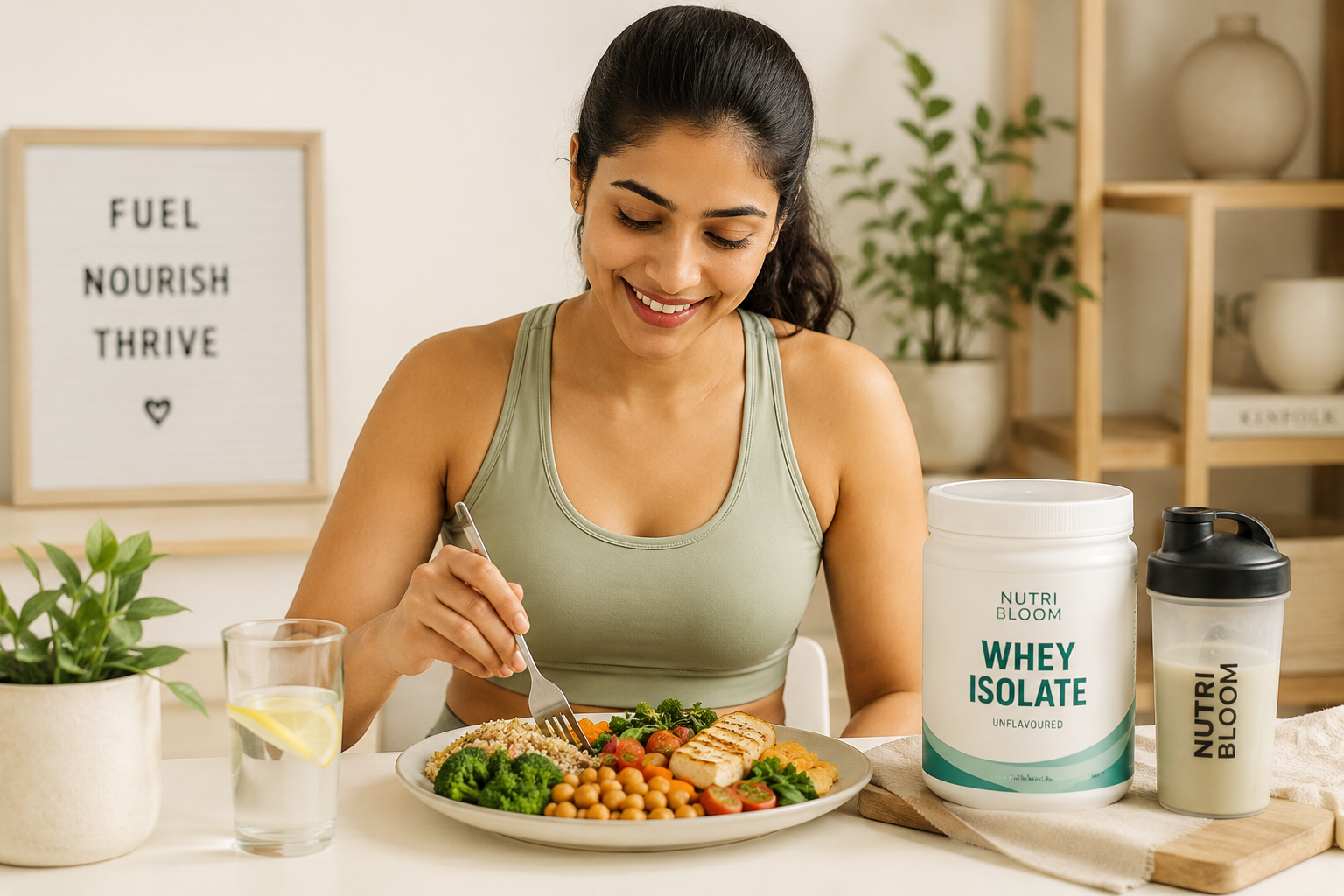
Beginner’s Guide to Balanced Nutrition for Women in India (Fat Loss, Fitness and Everyday Health)
If you are constantly hopping from one diet trend to another and still not feeling confident in your body or energy levels, you are not alone. Most women are never taught how to eat in a simple, sustainable way that supports fat loss, strength and overall health at the same time.
In this guide, I am going to break down balanced nutrition for women in India in a very practical way. You will learn how to build a basic plate that works for fat loss, muscle gain and everyday health, without counting every calorie or cutting all your favourite foods.
This article is for general education only and is not medical advice. If you have any medical condition or are pregnant, breastfeeding or on medications, please speak to your doctor or a qualified dietitian before making big changes.
Affiliate Disclosure:
Some of the links in this article are affiliate links. If you buy through them, I may earn a small commission at no extra cost to you. I only recommend products I would use myself or suggest to close friends.
What Is “Balanced Nutrition” for Women?
Why Women’s Nutrition Needs Are Different
Women go through several hormonal phases in life – monthly cycles, possible pregnancies, postpartum recovery, peri‑menopause and menopause. All these stages can affect appetite, cravings, mood and energy.
Because of blood loss during periods and lifestyle patterns, many women in India are prone to issues like low iron, low vitamin D and low calcium. These nutrient gaps can show up as fatigue, hair fall, dull skin, mood swings and poor immunity.
Balanced nutrition for women is not just about eating less to be “slim.” It is about giving your body enough protein, good carbs, healthy fats, vitamins and minerals so you can think clearly, move strongly and feel stable in your mood and energy throughout the day.
The 4 Key Parts of a Balanced Plate
A balanced plate is built from four simple elements:
- Carbohydrates for energy – for example, roti, rice, idli, dosa, poha, upma, millets and fruits.
- Protein for muscle, metabolism, hair and skin repair – for example, dal, rajma, chole, paneer, curd, milk, eggs, chicken and fish.
- Healthy fats for hormones, brain and vitamin absorption – for example, nuts, seeds, ghee, coconut and good quality oils in moderation.
- Fiber‑rich vegetables and fruits for digestion and fullness – for example, sabzi, salads, leafy greens and seasonal fruits.
When these four parts are present in sensible portions most of the time, your body gets a stable energy supply, stays satisfied after meals and finds it much easier to lose fat, maintain muscle and stay healthy.
How to Build a Simple Balanced Plate (Indian Diet Friendly)
The Plate Method (Easy Visual Rule)
Instead of weighing every ingredient, use a simple plate method for most of your main meals:
- Fill about half of your plate with vegetables or salad – cooked sabzi, stir‑fried veggies, mixed salad, or a combination.
- Use one‑quarter of your plate for protein – dal, rajma, chole, paneer, tofu, curd, eggs, chicken or fish.
- Use the remaining one‑quarter of your plate for carbohydrates – roti, rice, idli, dosa, poha, upma or millet‑based dishes.
- Add a small amount of healthy fat, such as 1–2 teaspoons of ghee or oil in cooking, or a small handful of nuts and seeds across the day.
This simple visual rule helps you avoid both extremes: oversized carb portions with hardly any protein and vegetables, or extreme low‑carb plates that leave you hungry and cranky.
Portion Control Without Weighing Food
You can also use your hand as a quick portion guide:
- Protein: 1–2 palm‑sized portions at each main meal.
- Carbs: 1 cupped hand of cooked rice, grains or starchy foods at each main meal (you can adjust this slightly based on your goal).
- Fats: About 1–2 thumb‑sized portions of visible fats per meal (ghee, oil, butter, nut butters).
Eat slowly, chew your food and aim to stop when you feel about 80–90% full rather than stuffed. This single habit can improve digestion and make it easier to manage your weight without obsessing over numbers.
Nutrition for Fat Loss: Eat Less, But Not “Tiny”
Key Principles for Healthy Fat Loss
Healthy fat loss does not come from starving yourself on soup, biscuits or black coffee alone. It comes from creating a small, sustainable calorie deficit while still giving your body enough nutrients.
When you eat almost nothing all day and then overeat at night or on weekends, your body and mind both feel stressed and confused. A better approach is to eat slightly less than you burn, but focus on enough protein, vegetables and whole foods so you stay satisfied.
Keeping protein intake high during fat loss is especially important. It helps protect your muscle, supports metabolism and keeps you fuller for longer compared to purely carb‑heavy meals.
Fat‑Loss Plate Tweaks (Indian Context)
To adjust your balanced plate for fat loss, you do not need to remove entire food groups. You mainly need to adjust portions and choose higher quality foods:
- Slightly reduce the carb portion – for example, have 1 roti instead of 2, a smaller serving of rice, or fewer slices of bread, and fill that space with more vegetables.
- Keep at least 1 palm of protein at every main meal, whether it is dal, paneer, eggs, chicken or fish.
- Prefer whole grains like roti, brown rice or millets over constant white bread, refined flour snacks and bakery items.
- Limit sugary drinks, sweets, biscuits and fried snacks to occasional treats instead of daily habits.
When you do this consistently, you gently lower your overall calorie intake without feeling like you are on a punishment diet.
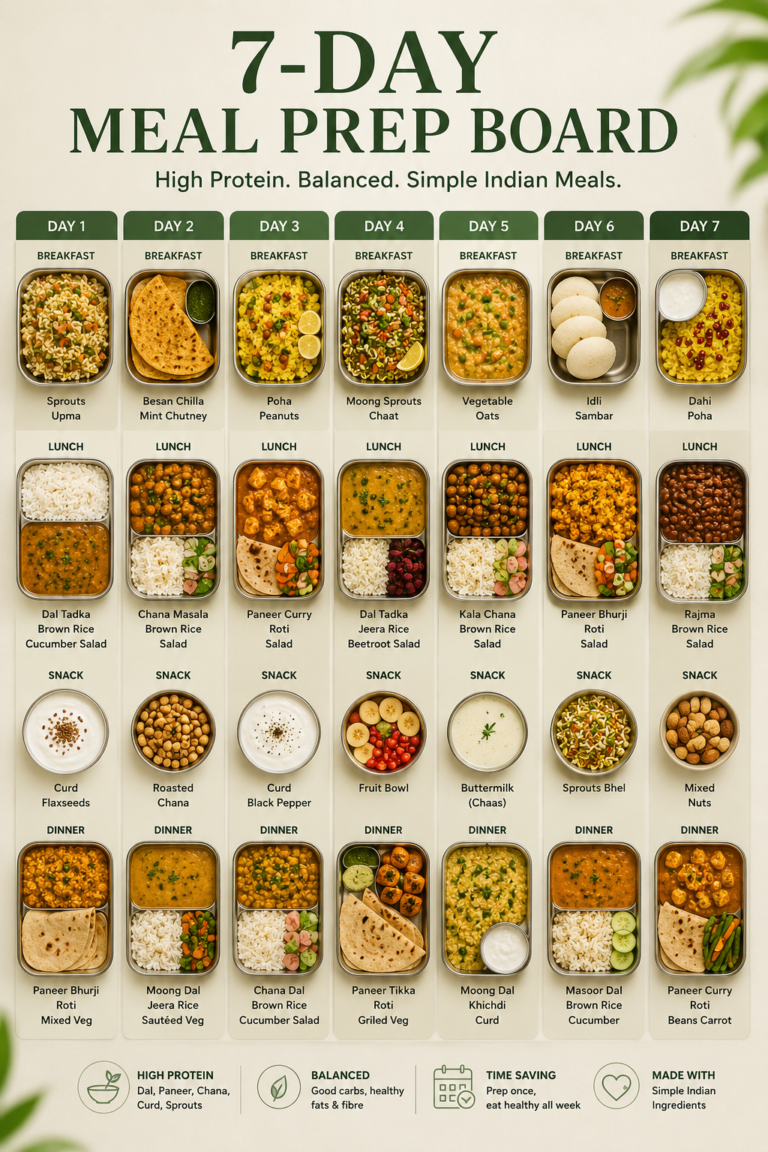
Sample One‑Day Fat Loss Menu (Simple Ideas)
Here is a simple, realistic fat‑loss day you can adapt:
- Breakfast
- Option 1: Vegetable upma cooked with minimal oil, plus a small bowl of plain curd.
- Option 2: Two besan chillas with paneer stuffing and some green chutney.
- Lunch
- 1–2 rotis made with wheat or mixed flour.
- 1 bowl of dal or rajma or chole.
- 1 serving of sabzi (any seasonal vegetable).
- A small salad (cucumber, tomato, onion, carrot, lemon).
- Evening Snack
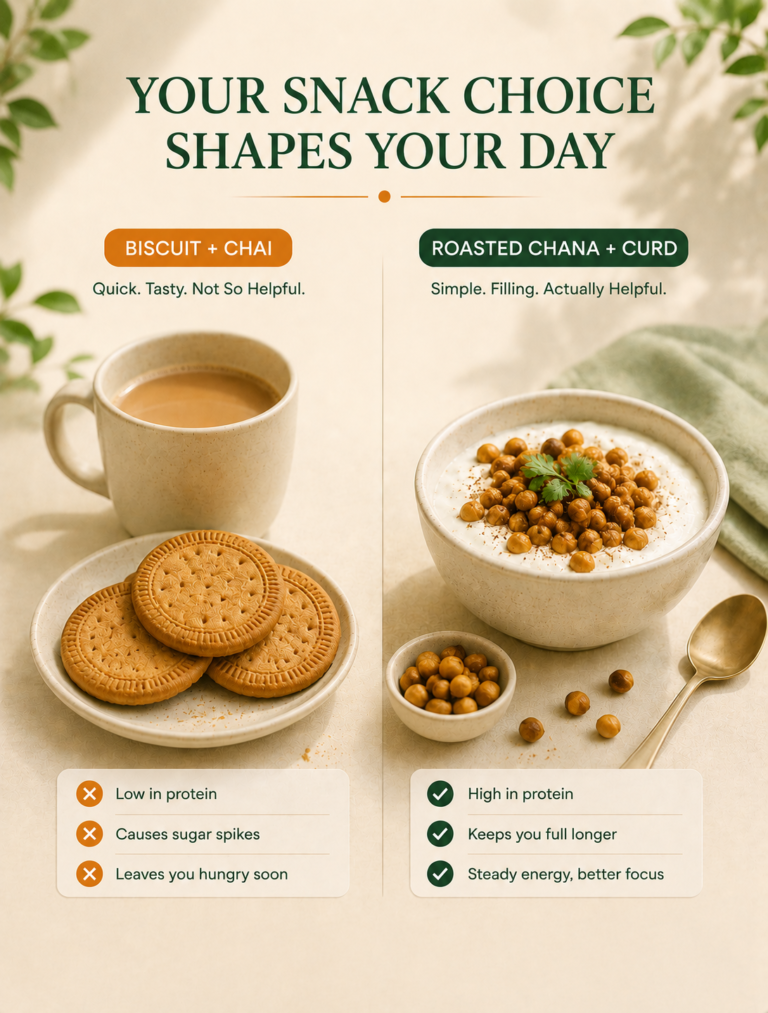
- Roasted chana or a small handful of nuts and seeds.
- Or one fruit like apple, orange or guava.
- Dinner
- Option 1: Rice with sambar and one vegetable curry, plus curd.
- Option 2: Grilled or sautéed paneer or chicken with a generous serving of stir‑fried or roasted vegetables.
If you still find it difficult to reach your protein target even after these changes, you can later explore a good quality protein powder as a convenient add‑on. That decision depends on your budget, digestion and preferences.
Nutrition for Muscle Gain and Fitness Performance
Why Women Should Care About Muscle
Many women are scared of the word “muscle,” but muscle is exactly what gives your body a toned, firm shape. It supports your joints, bones and posture and helps you stay active as you age.
More muscle also means a stronger metabolism, which can make maintaining a healthy weight easier over the long term. Building muscle does not mean you will suddenly become bulky. For women, it usually looks like better curves, more definition and a stronger, confident presence.
Muscle‑Gain Nutrition Basics
If your goal is to become stronger, lift heavier or build visible muscle, your nutrition strategy needs a few tweaks compared to pure fat loss:
- You generally need to eat at maintenance or a slight surplus of calories, not constantly diet.
- Your protein intake should be higher and spread across 3–4 meals per day.
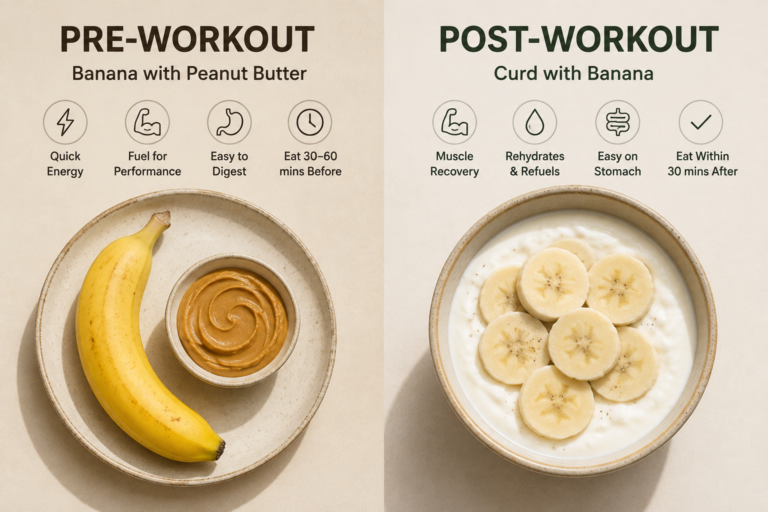
- You need enough carbohydrates to fuel your workouts and support recovery afterwards.
Skipping meals, relying on low‑calorie salads or eating mostly snacks will not support real muscle gain, even if you are working hard in the gym.
Practical Ways to Add More Protein
To support muscle gain and good fitness performance, focus on including protein in a very consistent way:
- Add eggs, paneer, tofu, curd, lentils, sprouts, chicken or fish into your daily meals. Try to have one solid protein source in every main meal.
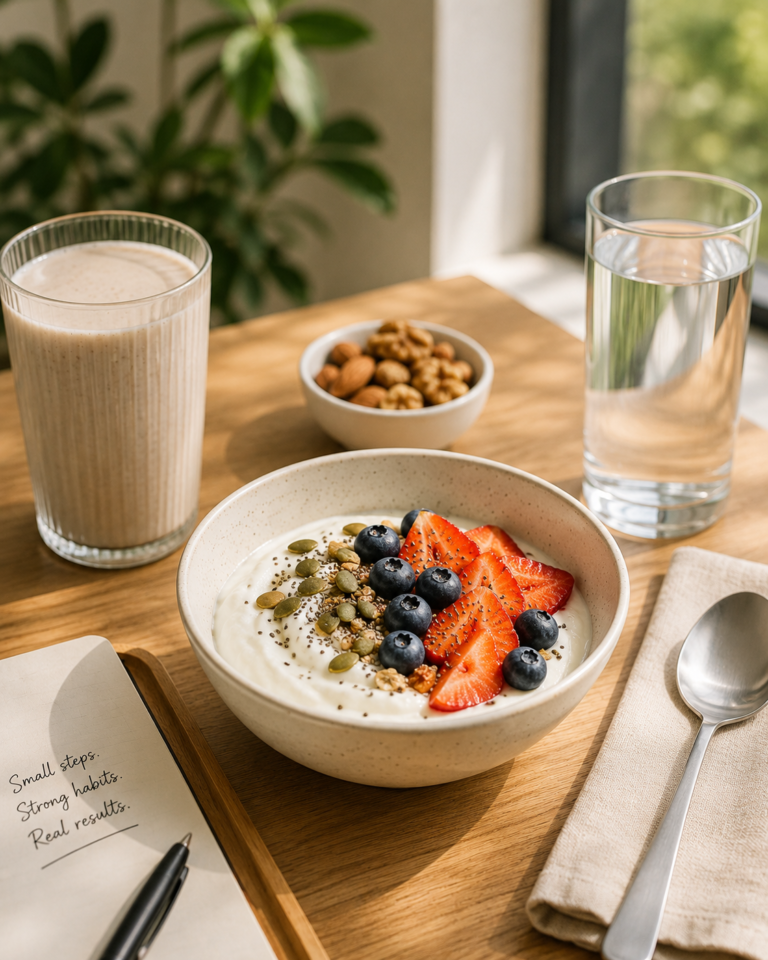
- Improve breakfast by including protein: paneer bhurji with roti, an omelette with vegetables, Greek‑style yogurt with fruit, or sprouts chaat.
- If you still struggle to hit your protein target through food alone, consider one serving of a quality protein shake, often after your workout or between meals.
The goal is not perfection overnight. It is slowly shifting your plate so protein and vegetables become your non‑negotiable foundations, and carbs and fats are adjusted based on your goal.
Everyday Nutrition for Women’s Health (Hormones, Skin, Hair and Immunity)
Key Nutrients Many Women Miss
Balanced nutrition is also about long‑term health, not only weight or gym progress. Some nutrients are especially important for women:
- Iron – helps prevent anemia and supports energy and focus.
- Calcium and vitamin D – support bone health and reduce the risk of osteoporosis later in life.
- Healthy fats and B‑vitamins – support hormones, mood, brain function and hair health.
- Antioxidants from colourful fruits and vegetables – protect cells, support skin glow and strengthen immunity.
When these are lacking for months or years, you may feel constantly tired, get sick often, or notice skin and hair quality dropping, even if your weight looks “okay.”
Daily Habits for Better Health
A few simple nutrition habits can make a big difference over time:
- Aim for at least two servings of fruits and two to three servings of vegetables every day. Try to include different colours – green, orange, red, purple.
- Include healthy fats such as a small handful of nuts and seeds, a bit of ghee or cold‑pressed oil, and avoid a heavy dependence on deep‑fried street foods.
- Drink enough water throughout the day and keep sugary drinks, packaged juices and excessive energy drinks to an occasional treat.
- Whenever possible, choose home‑cooked meals over constant outside fast food or heavy restaurant meals.
These habits, done consistently, support your hormones, digestion, skin, hair and overall resilience.
Common Nutrition Mistakes Women Make
Dieting All Week, Overeating on Weekends
A very common pattern is eating extremely little from Monday to Friday and then losing control on weekends. This can be frustrating because you feel like you are always dieting but not seeing results.
Your body responds better to consistency. A moderate, steady approach to eating is healthier and more sustainable than cycles of strict restriction followed by overeating.
Skipping Protein and Overdoing Carbs
In many typical Indian eating patterns, there is chai with biscuits, some bread or namkeen, a lot of rice or roti, and very little consistent protein. This can leave you full for a short time but hungry again soon, and it can make fat loss and muscle gain much harder.
Fixing this does not require fancy superfoods. It usually means intentionally adding dal, curd, paneer, eggs, sprouts or meat to every main meal and reducing some refined carbs.
Drinking Too Many Calories
Sugary cold drinks, packaged juices, fancy coffees, energy drinks and alcohol can quietly add a lot of extra calories without real nutrition. If you are drinking several of these in a week, they may be blocking your results.
Shifting towards water, lemon water, buttermilk, plain tea or coffee with less sugar can help you control calorie intake without feeling deprived.
Putting It All Together: Simple Action Plan
Step‑by‑Step Plan for the Next 7 Days
To avoid overwhelm, focus on a few simple actions this week:
- Step 1: Add one palm of protein to every main meal (breakfast, lunch, dinner).
- Step 2: Fill half your lunch and dinner plate with vegetables or salad.
- Step 3: Cut out or reduce one high‑sugar or fried snack per day and replace it with fruit, roasted chana or nuts.
- Step 4: Decide a daily water goal (for example, 6–8 glasses) and keep a bottle near you.
- Step 5: Include some daily movement – walking, a short home workout, or a basic gym routine.
These five steps alone can create noticeable changes in your energy, digestion and weight trends over a few weeks.
When to Consider Supplements
Food should always be your base, but sometimes supplements can help:
- If you consistently struggle to hit protein needs through food, a good quality protein powder can be a convenient support.
- If blood tests show deficiencies like low iron, vitamin D or B12, your doctor may recommend supplements.Once you know what you need, a simple women’s multivitamin can sometimes help cover small gaps.
- Do not self‑medicate high‑dose supplements just because of social media trends. Always check with a healthcare professional for your personal needs.
In separate posts, you can explore detailed guides on choosing protein powders, multivitamins and other supplements suitable for Indian women.
Final Thoughts and Next Steps
Balanced nutrition for women is not about a perfect, rigid diet. It is about understanding what your body needs and making small, smart adjustments to your daily meals. When you consistently include enough protein, vegetables, sensible carbs and healthy fats, your body naturally moves towards better fat loss, muscle tone and overall health.
Start with one or two changes from this guide this week and build from there. From here, your next step can be to learn how to pick a good protein powder or build a basic weekly meal plan that supports your goals.

One Comment