Best High-Protein Foods for PCOS/PCOD Management (Indian Diet)
PCOS affects roughly 1 in 5 Indian women, and one of the most effective, non-medical tools for managing it is diet — specifically, getting enough protein at every meal to improve insulin sensitivity. Protein slows glucose absorption, reduces insulin spikes, and helps control the cravings and weight gain that often come with PCOS.
This guide covers exactly which high-protein Indian foods help with PCOS, what to avoid, and how to structure your plate for better hormonal balance.
This article is for general education only and is not medical advice. Please work with a doctor or dietitian for personalized PCOS management, especially if you’re on medication.
Affiliate disclosure
Affiliate Disclosure:
This article may contain affiliate links. If you buy through them, I may earn a small commission at no extra cost to you. I only recommend products I would suggest to a close friend.
Why protein matters so much for PCOS
PCOS is closely linked to insulin resistance — when cells don’t respond well to insulin, the body produces more of it, which worsens weight gain, acne, and hormonal imbalance. Protein directly counters this because it slows glucose absorption into the bloodstream, preventing the sharp insulin spikes that refined carbs cause.
Most PCOS-focused nutrition guides recommend 20–30g of protein per meal, spread across all three main meals, rather than concentrating it at dinner.
Best high-protein foods for PCOS (Indian diet)
Lentils and legumes
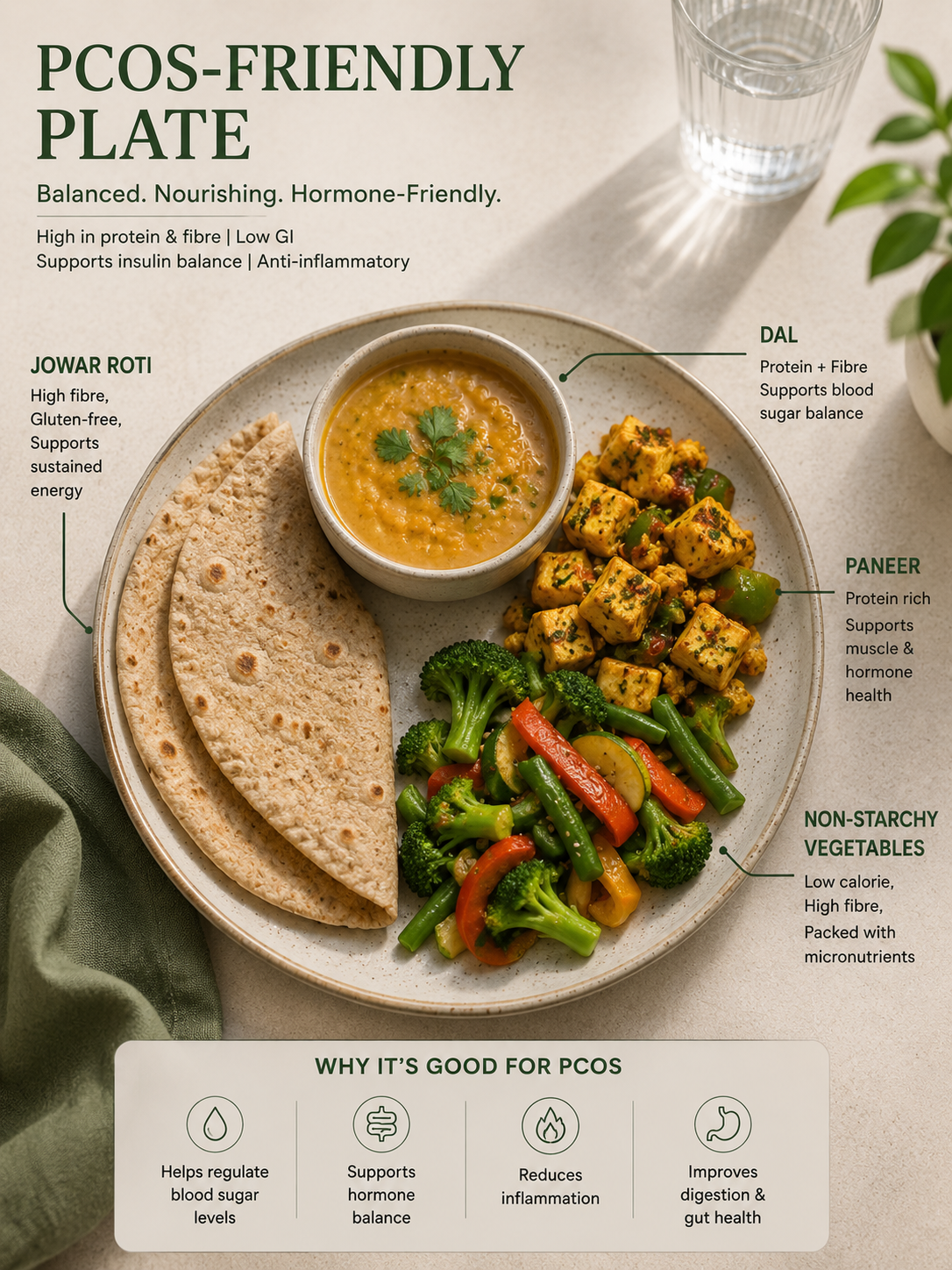
Every dal is considered PCOS-friendly. They’re high in protein, fiber, and resistant starch, which together slow glucose absorption and directly improve insulin sensitivity. Best options include:
- Moong dal, masoor dal, toor dal.
- Rajma, chana, chole.
- Sprouts (moong, chana).
Tip: Eat dal at every lunch and dinner for consistent protein intake.
Paneer and dairy
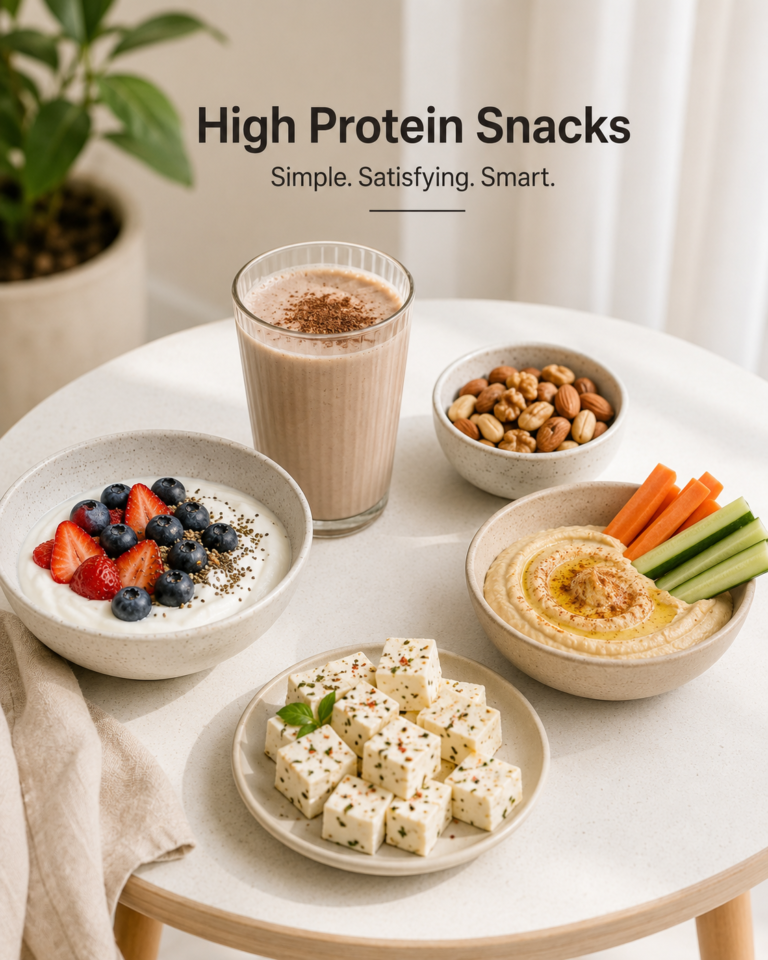
Paneer, curd (dahi), and Greek-style yogurt are excellent PCOS-friendly protein sources.
- Paneer: 50–80g per serving, 3–4 times a week is a good balance since it’s also high in saturated fat.
- Curd: Plain, unsweetened curd supports gut health and may improve insulin sensitivity through its probiotic content.
Eggs
Eggs are one of the most PCOS-friendly protein sources, and outdated concerns about cholesterol from eggs don’t apply to most healthy individuals. 2–3 eggs per day is considered excellent for PCOS management.
Fish (for non-vegetarians)
Oily fish like mackerel, sardines, and pomfret are particularly valuable because their omega-3 fatty acids are anti-inflammatory and may help reduce elevated testosterone levels associated with PCOS. Aim for fish 2–3 times per week.
Chicken
A lean, versatile protein source — grill or cook in minimal oil to keep it PCOS-friendly.
Tofu and soy (in moderation)
Tofu and edamame in moderate amounts are fine, but excessive processed soy products may affect hormonal balance due to phytoestrogens, so keep portions reasonable rather than eliminating soy entirely.
Nuts and seeds
Almonds, walnuts, flaxseeds, and pumpkin seeds provide protein alongside zinc, magnesium, and healthy fats that support hormone regulation. Flaxseeds in particular are one of the most accessible Indian sources of plant-based omega-3s.
The PCOS plate formula
Most PCOS nutrition experts recommend structuring your plate this way at every meal:
| Plate Section | What to Fill | Examples |
|---|---|---|
| 50% Vegetables | Non-starchy sabzi | Bhindi, palak, methi, gobhi, beans, tori, capsicum |
| 25% Protein | Legumes, dairy, or eggs | Dal, rajma, chana, paneer, dahi, eggs, tofu |
| 20% Complex Carbs | Low-GI grains | Jowar/bajra/ragi roti, small portion of brown rice |
| 5% Healthy Fat | Ghee, nuts, seeds | 1 tsp ghee, handful of almonds or walnuts |
Starting meals with vegetables or salad before carbs can also help slow subsequent glucose absorption.
Foods to limit or avoid with PCOS
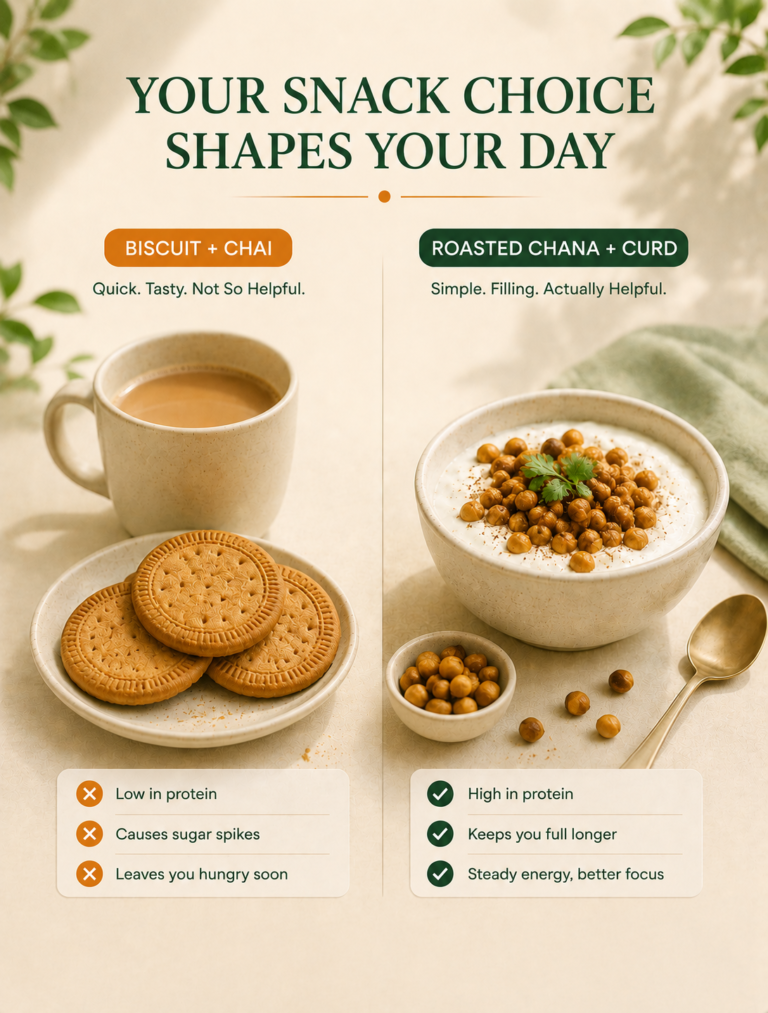
- Refined carbohydrates — maida products (naan, white bread, biscuits, pastries), polished white rice in large portions.
- Sugary foods and drinks — mithai, sweetened chai, packaged juices, cold drinks, flavored yogurts.
- Deep-fried foods — samosas, poori, bhatura, fried snacks.
- Processed and packaged snacks — instant noodles, chips, namkeen, ready meals.
- Excess dairy — cheese, cream, flavored milk in large quantities (moderate curd and paneer are fine).
Sample one-day PCOS-friendly meal plan
- Early morning: Warm water with soaked fenugreek (methi) seeds.
- Breakfast: Moong dal chilla (2) with mint chutney + a small bowl of plain dahi.
- Mid-morning: A handful of almonds and walnuts + 1 guava or apple.
- Lunch: 1 jowar or bajra roti + dal + non-starchy sabzi (bhindi, palak, or gobhi) + cucumber raita + salad.
- Evening snack: Roasted chana or makhana + buttermilk with roasted cumin.
- Dinner: Grilled paneer or chicken + quinoa or a jowar roti + salad.
Additional PCOS-friendly habits
- Never eat carbs alone — always pair roti, rice, or bread with dal, sabzi, curd, or another protein source to blunt the glucose spike.
- Reduce sugar gradually — cutting chai sugar from 2 teaspoons to none over 4–6 weeks is more sustainable than sudden elimination.
- Don’t skip meals — skipping breakfast especially leads to compensatory glucose spikes later in the day.
- Include anti-inflammatory spices — turmeric, cinnamon, and ginger are commonly recommended to help reduce PCOS-related inflammation.
Final thoughts
Managing PCOS through diet doesn’t require eliminating entire food groups or following extreme restrictions. Prioritizing 20–30g of protein per meal, choosing low-GI carbs, and building your plate around the 50-25-20-5 formula can meaningfully improve insulin sensitivity and PCOS symptoms over time.