Beginner Gym Guide for Women: What to Do in Your First 4 Weeks
Walking into a gym for the first time can feel intimidating.
There are machines you do not recognise, people lifting weights confidently, loud music, mirrors everywhere, and lots of confusing advice online. It is completely normal to feel nervous and wonder where to start.
But here is the truth: you do not need to know every machine, lift heavy weights, or spend two hours at the gym to get results.
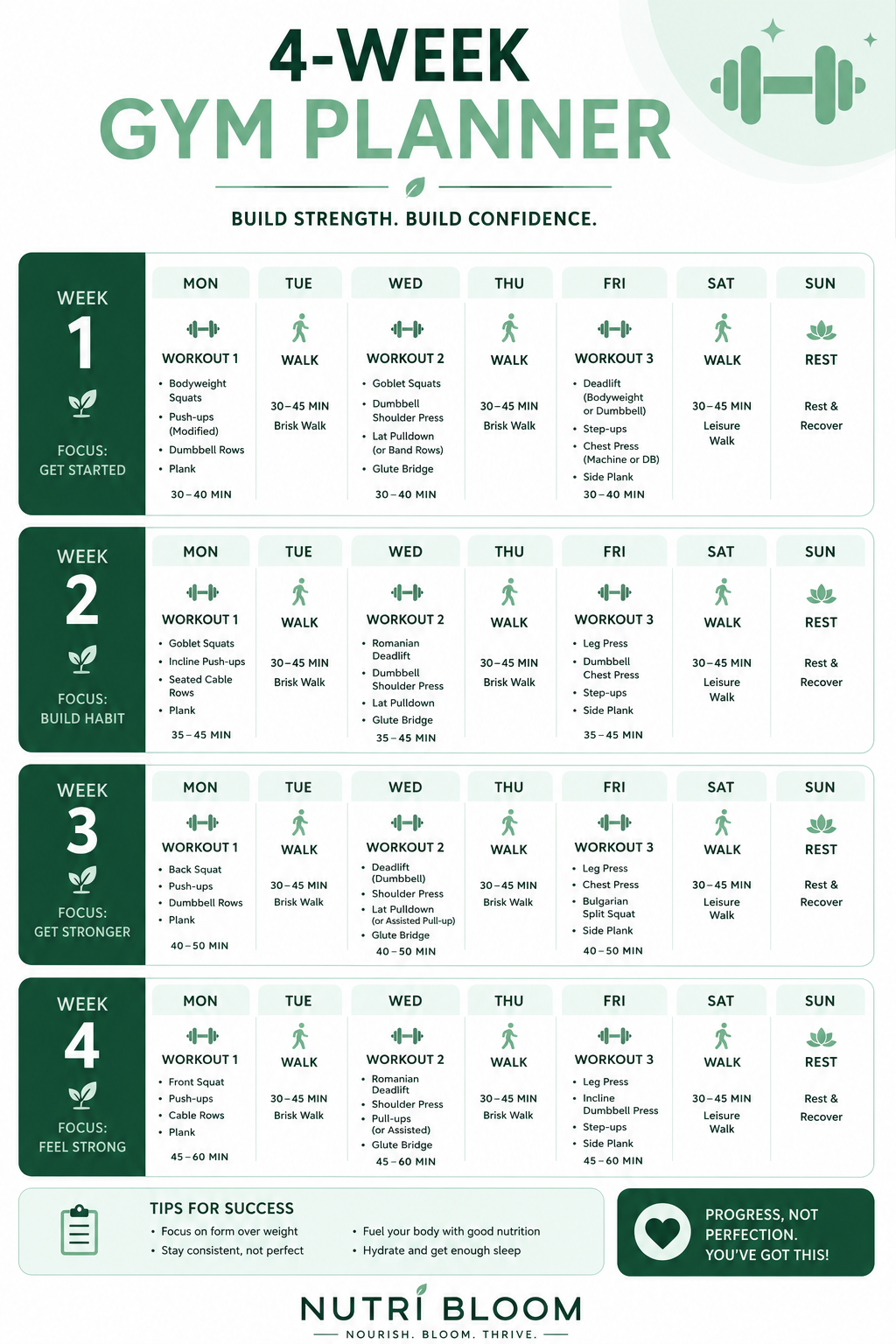
For your first four weeks, your main job is to learn a few basic movements, build confidence, practice good form, and create a routine you can actually maintain. Three full-body workouts per week, along with walking and good nutrition, are more than enough for a beginner to become stronger, improve fitness, and support fat loss.
This beginner gym guide is for women who want to feel toned, strong, and confident—not overwhelmed.
This article is for general education only and is not medical advice. If you are pregnant, postpartum, have an injury, chronic pain, heart-related concerns, severe dizziness, or another medical condition, speak with a doctor or qualified fitness professional before beginning a new exercise plan.
Affiliate Disclosure
Affiliate Disclosure: Some links in this article may be affiliate links. If you purchase through them, I may earn a small commission at no extra cost to you. I only recommend products I would be comfortable suggesting to a close friend.
First: what should women do at the gym?
Your gym routine should include three things:
- Strength training to build muscle, shape, strength, posture, and confidence
- Cardio or walking to support heart health, stamina, and daily calorie expenditure
- Mobility and recovery to keep your body feeling good and reduce stiffness
Strength training should be the foundation. It does not make most women “bulky.” Building noticeable muscle size requires a long time, progressive heavy training, and often a calorie surplus. For beginners, strength training more commonly leads to better posture, stronger legs and glutes, improved body composition, and a toned appearance.
Adults are generally advised to perform muscle-strengthening activities that work all major muscle groups at least two days weekly. A beginner can realistically start with two or three full-body gym sessions per week on non-consecutive days.
What to take to the gym
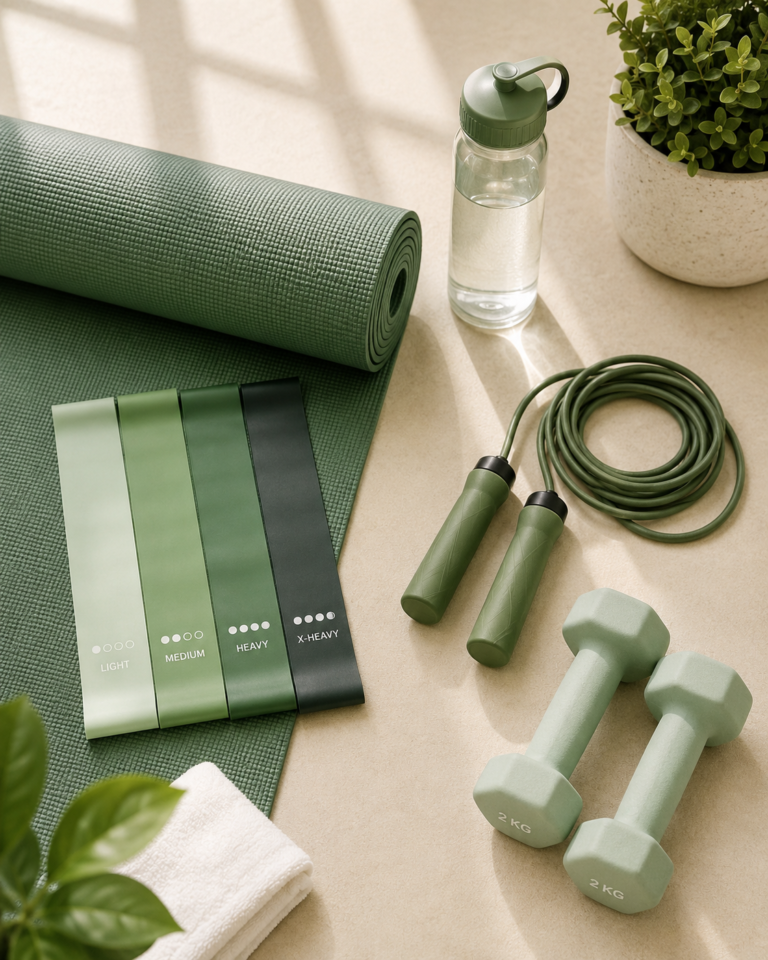
You do not need a huge gym bag. Keep it simple:
- Water bottle
- Towel
- Comfortable workout clothes
- Supportive training shoes
- Hair tie or clips
- Phone and earphones, if music helps you focus
- Small notebook or notes app to record your exercises and weights
- “beginner-friendly gym shoes for women”
- “leak-proof gym water bottle”
- “comfortable women’s workout leggings”
- “small gym towel for workouts”
Do not buy a huge supplement stack before you have even built a workout habit. Your basics are enough.
Your simple weekly gym schedule
For your first month, choose three non-consecutive days. For example:
| Day | Workout |
|---|---|
| Monday | Full-Body Workout A |
| Tuesday | 20–30 minute walk or rest |
| Wednesday | Full-Body Workout B |
| Thursday | 20–30 minute walk, stretching, or rest |
| Friday | Full-Body Workout A |
| Saturday | Easy walk, mobility, or rest |
| Sunday | Full rest |
The following week, switch the order: Workout B on Monday, Workout A on Wednesday, Workout B on Friday.
This means you train your full body regularly but still give your muscles time to recover. Three 45–60-minute full-body sessions per week are a practical format for beginners.
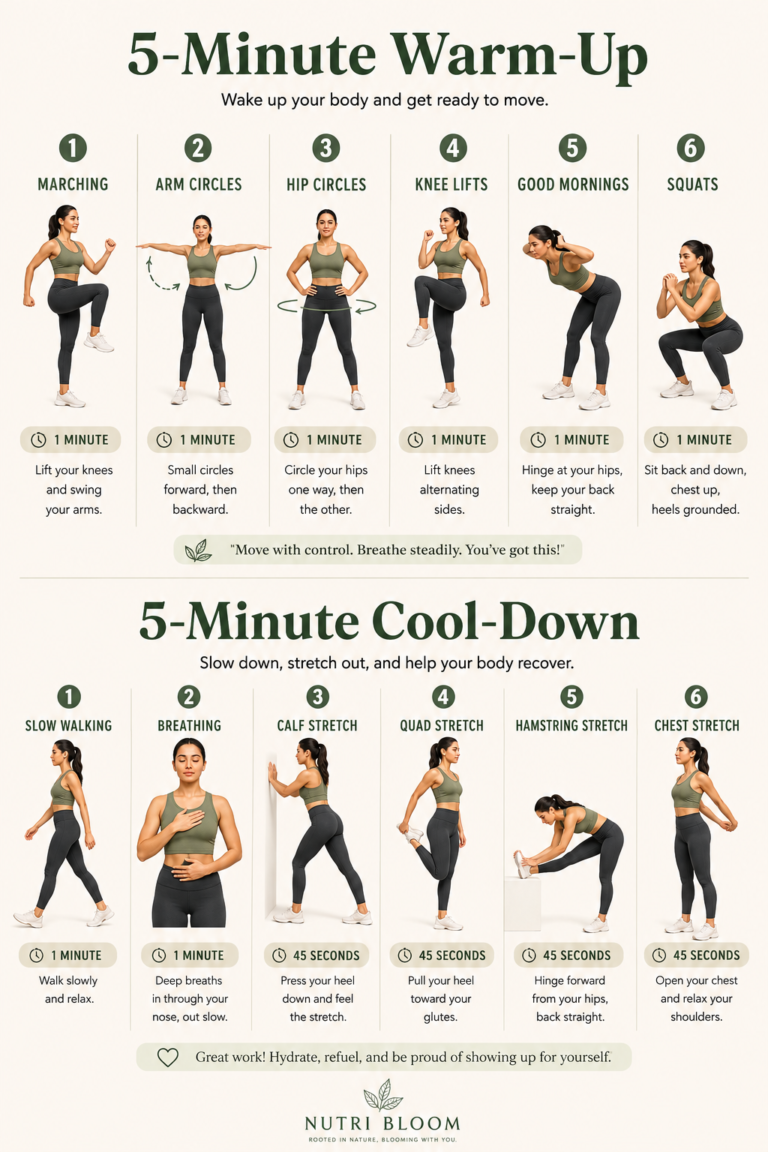
Before every workout: warm up for 5–10 minutes
Do not start lifting immediately after entering the gym.
Spend 5–10 minutes doing a light warm-up:
- Walk on the treadmill at an easy-to-moderate pace
- Use the stationary cycle or cross trainer
- Do shoulder rolls, arm circles, hip circles, and gentle bodyweight squats
- Start your first exercise with one very light practice set
Your warm-up should make you feel warmer and more mobile, not exhausted.
Full-Body Workout A
Start every exercise with a weight that feels manageable. You should be able to complete the final few reps with effort, but without losing form.
In Week 1, do 2 sets of each exercise. From Week 2 onward, do 2–3 sets when you feel comfortable. Aim for 8–12 repetitions for most strength exercises, resting for 60–90 seconds between sets. This is a common beginner guideline for learning strength movements safeley.
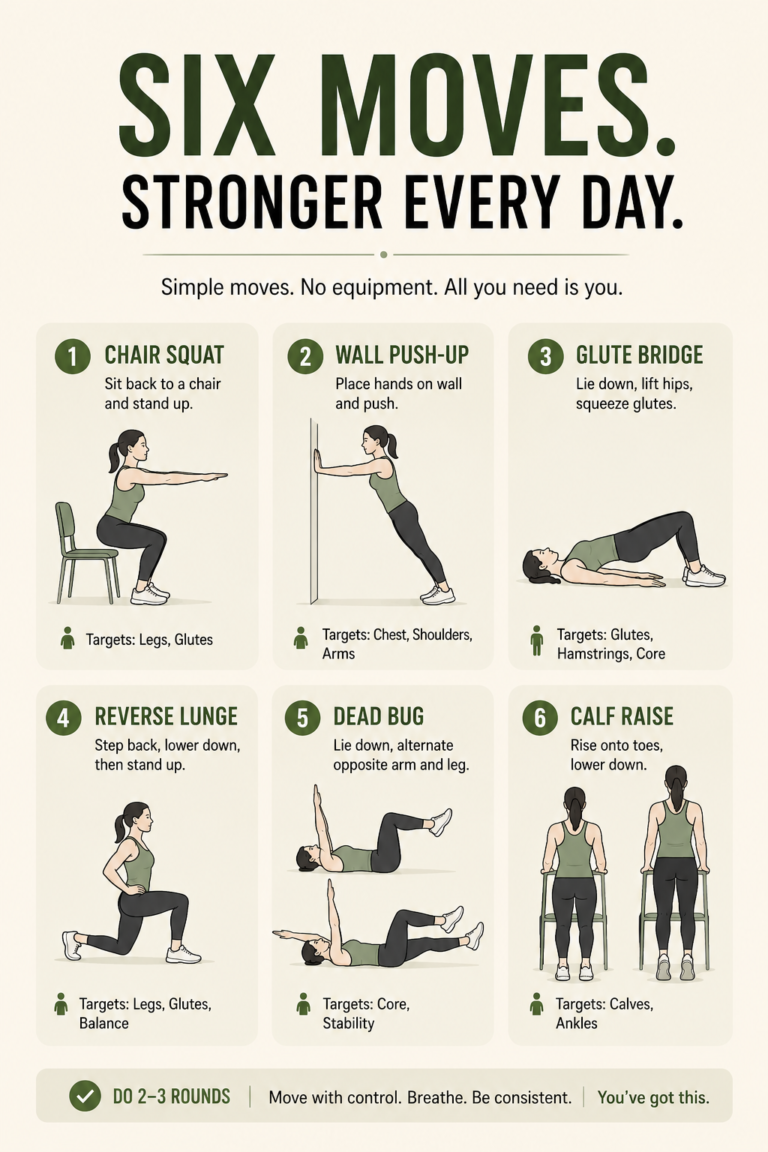
1. Goblet squat or leg press
Works: Quads, glutes, hamstrings
- Choose the leg press if you feel nervous about squats.
- Start with a light-to-moderate weight.
- Lower slowly and press through your feet.
- Keep your knees in the same direction as your toes.
- Do 2–3 sets of 8–12 reps.
Beginner note: The leg press is not “cheating.” It is a very useful way to learn lower-body strength while building confidence.
2. Seated cable row or machine row
Works: Back, shoulders, biceps
- Sit tall with your chest lifted.
- Pull the handle toward your lower ribs.
- Keep your shoulders away from your ears.
- Squeeze your upper back lightly, then return slowly.
- Do 2–3 sets of 8–12 reps.
3. Chest press machine or incline dumbbell press
Works: Chest, shoulders, triceps
- Adjust the seat so the handles are around chest height.
- Keep your feet stable on the floor.
- Press forward slowly without locking your elbows aggressively.
- Return with control.
- Do 2–3 sets of 8–12 reps.
4. Glute bridge or hip thrust
Works: Glutes, hamstrings
- Start with bodyweight glute bridges on a mat if you are new.
- When comfortable, use a light dumbbell or a hip-thrust machine if available.
- Pause and squeeze your glutes at the top.
- Lower slowly.
- Do 2–3 sets of 10–15 reps.
5. Dumbbell shoulder press
Works: Shoulders, upper body
- Sit on a bench with back support if possible.
- Start with very light dumbbells.
- Press upward with control, then lower slowly to shoulder height.
- Do 2 sets of 8–10 reps.
6. Dead bug or plank
Works: Core stability
- If you are new, choose dead bugs on a mat.
- If you can hold a plank with good form, do 15–30 seconds.
- Keep your core gently tight and avoid letting your lower back sag.
- Do 2–3 rounds.
Full-Body Workout B
This workout uses different movement patterns so you do not get bored and your body develops more evenly.
1. Romanian deadlift with dumbbells
Works: Hamstrings, glutes, back
- Hold light dumbbells in front of your thighs.
- Push your hips back while keeping your back neutral.
- Lower the dumbbells only as far as you can control comfortably.
- Press through your feet and squeeze your glutes to stand.
- Do 2–3 sets of 8–12 reps.
Important: This is a hip-hinge movement, not a squat. You should feel it mostly in the back of your legs and glutes.
2. Lat pulldown
Works: Back, arms
- Adjust the thigh pad so you feel secure.
- Pull the bar gently toward your upper chest.
- Keep your chest lifted and avoid leaning far backward.
- Return slowly; do not let the weight stack crash.
- Do 2–3 sets of 8–12 reps.
3. Step-ups or supported split squats
Works: Glutes, thighs, balance
- Use a low, stable step or bench.
- Step up slowly and push through your whole foot.
- Keep your knee tracking in line with your toes.
- Hold a support lightly if needed.
- Do 8–10 reps on each side for 2 sets.
Alternative: Use the leg extension machine if step-ups feel too difficult initially.
4. Seated leg curl
Works: Hamstrings
- Adjust the machine so your knees line up with its pivot point.
- Curl your heels down or back slowly.
- Pause for a moment, then return with control.
- Do 2–3 sets of 10–12 reps.
5. Dumbbell biceps curls
Works: Biceps
- Stand tall or sit on a bench.
- Curl light dumbbells slowly without swinging your body.
- Lower slowly.
- Do 2 sets of 10–12 reps.
6. Cable triceps pushdown
Works: Triceps
- Keep your elbows close to your ribs.
- Push the handle down slowly until your arms are straight.
- Return with control.
- Do 2 sets of 10–12 reps.
7. Side plank or bird dog
Works: Core, posture, stability
- For side planks, begin with your knees on the floor. Hold 15–20 seconds per side.
- For bird dogs, extend one arm and the opposite leg slowly while keeping hips stable.
- Do 8–10 reps per side.
Your 4-week gym plan
Week 1: Learn the gym and practise form
Your only goal this week is to show up.
- Complete 2 gym sessions if three feel overwhelming.
- Use light weights.
- Do 2 sets of each exercise.
- Stop each set while you still feel you could complete 2–3 more controlled repetitions.
- Ask a trainer to show you how to adjust machines if you are unsure.
A controlled start with manageable weights is more valuable than a very hard workout that leaves you unable to move for a week.
Week 2: Build your routine
- Aim for 3 full-body sessions.
- Continue with 2 sets, or add a third set for 1–2 exercises if recovery feels good.
- Write down the weight and repetitions you used.
- Add a 15–20-minute easy walk after one or two workouts if you enjoy it.
Week 3: Add a small challenge
- Continue with 2–3 sets of 8–12 repetitions.
- If you can complete all repetitions with excellent form and it feels easy, increase the weight slightly for your next session.
- Add one repetition per set before increasing the weight when you are unsure.
- Keep your workouts under an hour.
Small, repeatable improvements are the correct way to progress. A common progression rule is to add repetitions gradually and increase weight only once the top of the rep range feels controlled.pabau+2
Week 4: Build confidence, not exhaustion
- Continue three workouts per week.
- Use a little more resistance only where your form remains solid.
- Record your improvements: stronger weights, improved balance, more repetitions, or better energy.
- Decide which exercises you enjoy and want to keep in your next month.
By Week 4, you should feel more familiar with the gym and much less worried about “doing it wrong.”
How to choose the right weight
Choose a weight that feels challenging near the end of your set but still allows smooth, controlled form.
A useful beginner rule:
- If you can do 12 reps easily and could keep going for many more, the weight is too light.
- If you cannot do 6–8 reps with good form, the weight is too heavy.
- If you complete 8–12 reps and feel you could do about 2 more, that is a good starting range.
Do not compare your weights to anyone else’s. Your starting point is personal, and everyone begins somewhere.
Cardio: how much should you do?
Cardio is useful for heart health, fitness, stress relief, and calorie expenditure. But you do not need to spend 45 minutes on the treadmill after every weights session.
Try:
- 10–20 minutes of easy treadmill walking after strength training, if you enjoy it
- A 20–30-minute brisk walk on non-gym days
- Cycling, dancing, or another activity you genuinely enjoy
Aim to gradually build toward around 150 minutes of moderate activity weekly. Strength work and cardio can work together; you do not have to choose one or the other.studentwellness.
What to eat before and after the gym
Do not overcomplicate nutrition, especially during your first month.
Before the gym
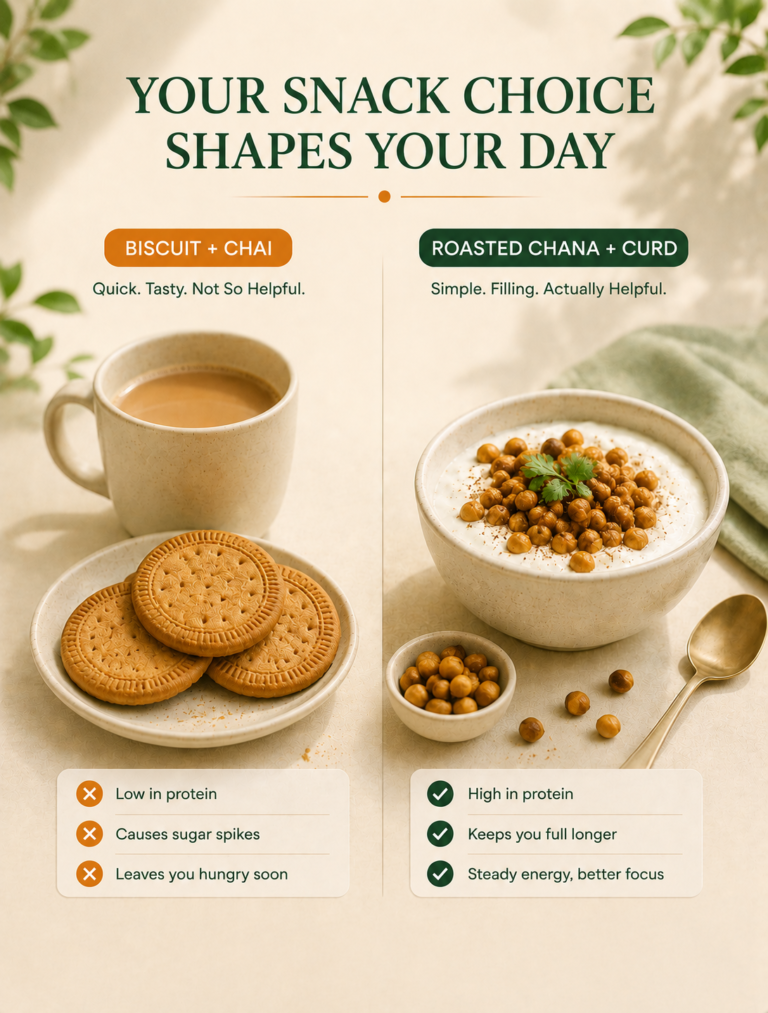
If you are hungry, have a light snack with carbohydrates and a little protein 30–90 minutes before training:
- Banana with a spoon of peanut butter
- Curd with fruit
- Toast with egg or paneer
- Moong dal chilla
- Oats with milk or yogurt
After the gym
Aim to eat a balanced meal or protein-rich snack within the next couple of hours:
- Paneer, dal, chicken, eggs, tofu, or curd
- Rice, roti, fruit, or potatoes for carbohydrates
- Vegetables when possible
You do not need to rush to buy supplements. A protein shake can be convenient if you cannot eat after training, but it is optional.
Common gym mistakes beginner women should avoid
Only doing cardio
Cardio is good, but strength training is what helps you get stronger, preserve muscle during fat loss, and create a toned appearance.
Changing your workout every day
You do not need 20 random exercises. Repeating a few core movements for 4–6 weeks gives you time to learn, improve, and track progress.
Using very heavy weights too soon
Start light enough to learn the movement. Good form will make you strong; ego lifting only increases injury risk.
Training every day without recovery
Muscles need recovery to adapt. Keep strength-training days non-consecutive and sleep enough.
Comparing yourself to others
Nobody starts confident. Every woman who looks comfortable in the gym was once new, confused, and figuring out the machines too.
Ignoring pain
Normal muscle soreness is different from sharp pain. Stop and get help if an exercise causes sharp, persistent, or worsening pain.
Frequently asked questions
How many days a week should a beginner woman go to the gym?
Start with 2–3 non-consecutive days each week. Three full-body workouts are a practical structure if you recover well and can maintain the routine.
Should women start with machines or free weights?
Both are useful. Machines can help beginners feel stable while learning movements; light dumbbells help build control and balance. Use whichever feels safe, and learn gradually.
Will lifting weights make me bulky?
No. Most women will develop strength, improved posture, muscle tone, and better body composition—not sudden bulky muscles. Significant muscle size requires years of focused training, progressive overload, and sufficient calories.
How long should each gym workout be?
A beginner session can be around 45–60 minutes, including a warm-up. Keep it shorter if that helps you stay consistent.
What if I miss a workout?
Do not restart the plan or punish yourself with extra cardio. Continue with your next planned workout. Long-term consistency matters more than one missed session.
Final thoughts
Your first month at the gym is not about becoming perfect overnight. It is about learning that you belong there, building a routine you can trust, and getting a little stronger each week.
Start light. Learn the basics. Train two or three times a week. Eat enough protein. Walk regularly. Then allow the results to build gradually.