Beginner Home Workout Plan for Women (No Equipment Needed)
Starting a fitness journey can feel intimidating, especially when you think you need a gym membership, expensive activewear, dumbbells, or an intense one-hour workout every day.
You do not.
For most beginners, the best workout plan is the one you can actually repeat. A few short, full-body sessions each week can help you build strength, improve energy, support fat loss, and feel more confident in your body. You can start right at home using only your body weight.
This beginner home workout plan is made for women who want to get stronger, lose fat gradually, and create a fitness routine that fits around college, work, family, or a busy Indian lifestyle.
This article is for general education only and is not medical advice. If you are pregnant, postpartum, have an injury, joint pain, heart-related concerns, or another medical condition, speak with a qualified healthcare professional before starting a new exercise routine.
Affiliate Disclosure
Affiliate Disclosure: Some links in this article may be affiliate links. If you purchase through them, I may earn a small commission at no extra cost to you. I only recommend products that I would be comfortable suggesting to a close friend.
Why strength training matters for women
Many women start with only walking, running, or cardio because they are worried that strength training will make them bulky. But bodyweight strength exercises can actually help create the “toned” look many women want because they help preserve and build muscle while improving posture and strength.
Strength work also supports your bones, joints, balance, and daily movement. You do not need to lift very heavy weights to begin; basic movements such as squats, wall push-ups, glute bridges, and lunges are enough to create a solid foundation. Adults are advised to do muscle-strengthening activities on at least two days each week, working all the major muscle groups.
The goal in your first month is not perfection. It is to prove to yourself that you can stay consistent.
What you need before you begin
You need very little for this workout plan:
- Comfortable clothes you can move in
- A small clear space at home
- A water bottle
- A chair or sofa edge for support
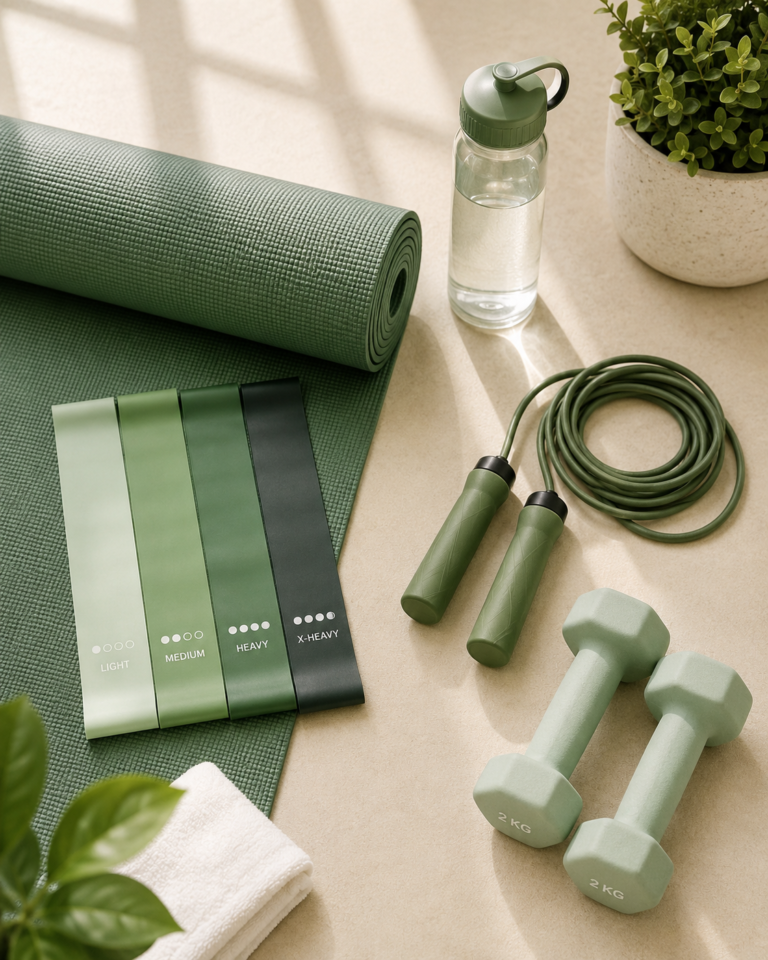
- A yoga mat or folded towel for floor exercises
- Comfortable shoes if you are walking outdoors
Affiliate link spot: If you recommend a product, link the phrase “beginner-friendly yoga mat” to your future article, Best Yoga Mats and Resistance Bands for Beginners in India.
You can do this routine barefoot on a non-slippery floor or in comfortable shoes. Keep your movements slow and controlled rather than trying to move as fast as possible.
Your weekly beginner workout schedule
This is a simple schedule you can repeat for the first four weeks.
| Day | Activity | Time |
|---|---|---|
| Monday | Full-body strength workout | 20–25 minutes |
| Tuesday | Brisk walk or light movement | 20–30 minutes |
| Wednesday | Full-body strength workout | 20–25 minutes |
| Thursday | Brisk walk, easy yoga, or rest | 20–30 minutes |
| Friday | Full-body strength workout | 20–25 minutes |
| Saturday | Easy walk, dance workout, or stretching | 20–30 minutes |
| Sunday | Full rest or gentle stretching | 5–10 minutes |
Three alternate-day full-body sessions are a practical beginner format. On other days, walking or gentle movement adds activity without overloading sore muscles.
Over time, aim to build toward around 150 minutes of moderate activity per week, such as brisk walking, while keeping at least two strength-training days.
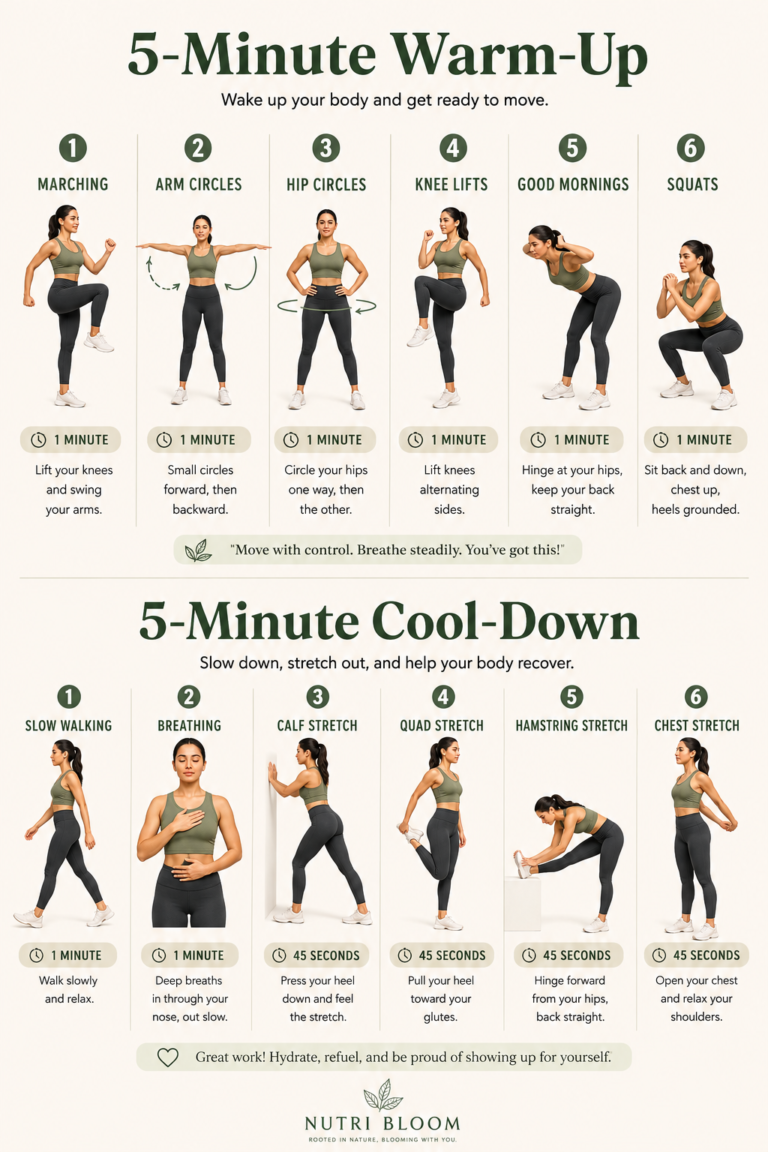
Warm up first: 5 minutes
Never jump straight into squats or lunges when your body is cold. Spend five minutes warming up to prepare your joints and muscles.
Do each movement for around 30–45 seconds:
- March in place with relaxed arms
- Shoulder rolls forward and backward
- Arm circles
- Gentle hip circles
- Alternating knee lifts
- Easy bodyweight good mornings: hands on hips, push hips back softly, then stand tall
- A few slow squats to a chair
You should feel slightly warmer by the end, but not tired.
Your full-body home workout
Start with 2 rounds in Week 1. Rest for 30–60 seconds between exercises when needed and 60–90 seconds between rounds.
In Weeks 3 and 4, add a third round only if your form still feels strong. A beginner-friendly approach is 2 sets of 8–12 controlled repetitions, gradually progressing only once the movements feel comfortable.
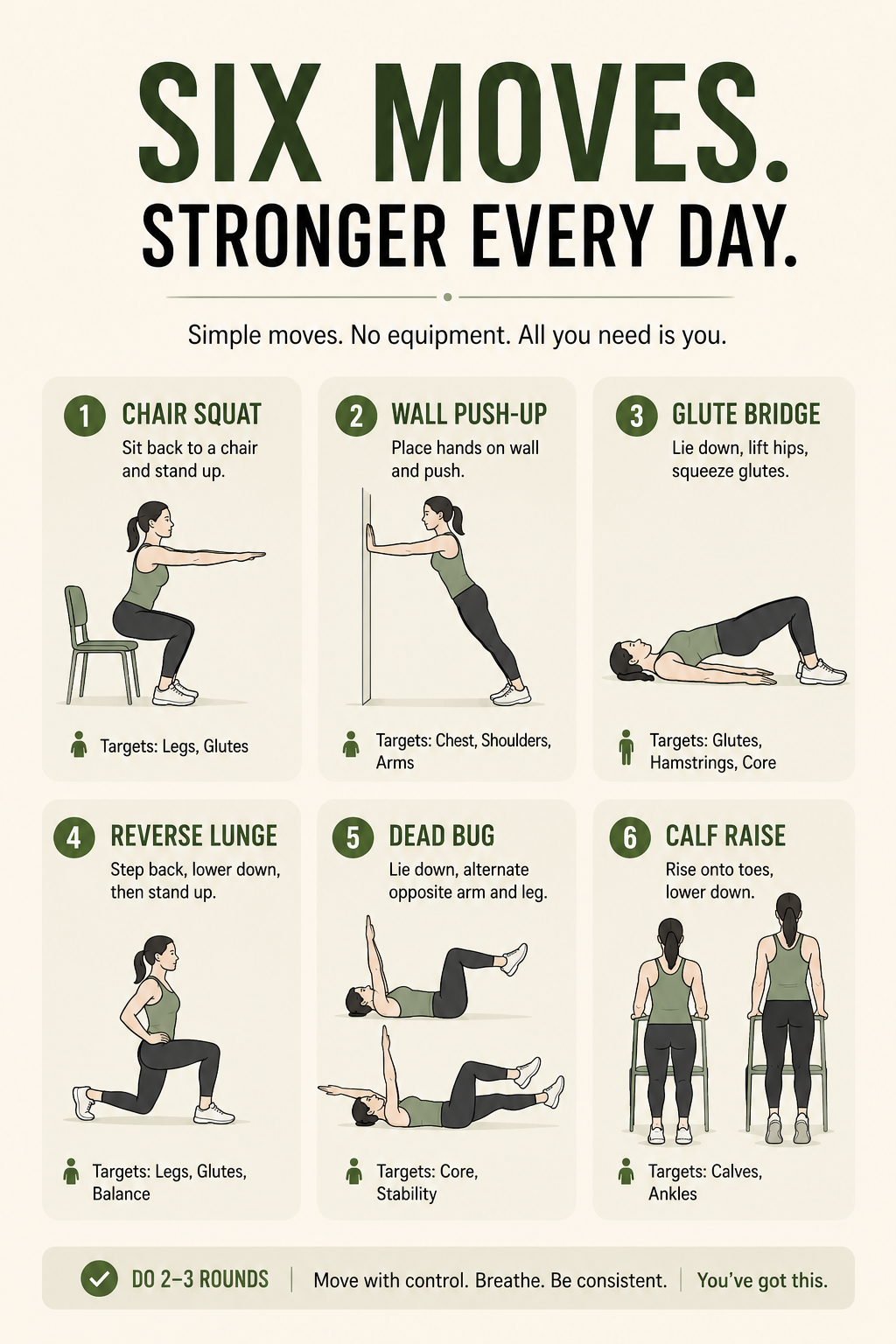
1. Chair squats
Works: Thighs, glutes, core
- Stand in front of a sturdy chair with feet about hip-width apart.
- Push your hips back as if you are going to sit down.
- Lightly touch the chair with your hips, then press through your feet to stand back up.
- Keep your chest lifted and knees pointing in the same direction as your toes.
- Do 8–12 repetitions.
Make it easier: Actually sit on the chair for a second before standing.
Make it harder later: Stop just above the chair instead of sitting down.
2. Wall push-ups
Works: Chest, shoulders, arms, core
- Stand facing a wall, around one arm’s length away.
- Place your hands on the wall at chest height and slightly wider than your shoulders.
- Bend your elbows and bring your chest gently toward the wall.
- Press through your palms to return to the starting position.
- Do 8–12 repetitions.
Make it easier: Stand closer to the wall.
Make it harder later: Move your feet further away from the wall, or progress to an incline push-up using a sturdy table or kitchen counter.
3. Glute bridges
Works: Glutes, hamstrings, core
- Lie on your back with knees bent and feet flat on the floor.
- Keep your feet about hip-width apart.
- Press through your heels and squeeze your glutes to lift your hips.
- Pause briefly at the top, then lower slowly.
- Do 10–12 repetitions.
Tip: Do not push through your lower back. Think about squeezing your glutes instead.
4. Reverse lunges with chair support
Works: Thighs, glutes, balance
- Stand near a wall or chair so you can hold it lightly for balance.
- Step one foot backward and lower gently until both knees bend comfortably.
- Push through the front foot to return to standing.
- Complete 8 repetitions on one side, then repeat on the other side.
Make it easier: Take a smaller step back and do not lower as far.
Alternative: If lunges hurt your knees, do another set of chair squats instead.
5. Dead bug
Works: Core stability and lower-abdominal control
- Lie on your back with knees bent at 90 degrees and arms pointed toward the ceiling.
- Slowly lower your right arm and left leg toward the floor without forcing them all the way down.
- Bring them back to the start and switch sides.
- Keep your lower back gently connected to the floor.
- Do 8–10 repetitions per side.
Make it easier: Move only your arms or only your legs at first.
6. Standing calf raises
Works: Calves, ankles, balance
- Stand tall and hold a chair lightly if required.
- Lift your heels so you rise onto the balls of your feet.
- Pause at the top, then lower slowly.
- Do 12–15 repetitions.
This is a simple exercise, but it is useful for ankle strength, walking, and balance.
Cool down: 3–5 minutes
Finish each session by allowing your heart rate to come down gradually.
Try:
- Slow walking around the room for one minute
- Gentle quad stretch while holding a wall
- Chest stretch against a doorway
- Child’s pose or an easy forward fold
- Slow deep breaths for one minute
Avoid forcing stretches. You should feel gentle tension, never sharp pain.
Four-week progression plan
Week 1: Learn the movements
- Complete 2 rounds.
- Do 8 repetitions of each movement.
- Focus on form and moving slowly.
- Take extra breaks when needed.
Week 2: Build consistency
- Complete 2 rounds.
- Increase to 10–12 repetitions when comfortable.
- Add a little more walking during the week.
Week 3: Add a small challenge
- Add a third round or add 2–3 repetitions to each movement.
- Try a lower chair squat or a slightly more angled wall push-up.
- Do not change everything at once.
Week 4: Feel stronger
- Aim for 2–3 rounds with good form.
- Reduce rest slightly only if you can still breathe comfortably and control each movement.
- Write down what feels easier now compared with Week 1.
Gradual progression—such as adding a set or increasing repetitions only once your form is strong—is safer and more sustainable for beginners.
How this supports fat loss and toning
No single exercise melts fat from one body area. Belly fat, thigh fat, and arm fat reduce gradually through overall fat loss, not hundreds of crunches or spot exercises.
This plan supports body recomposition by combining:
- Strength training to maintain and build muscle
- Walking and daily movement to increase activity
- Balanced nutrition with enough protein
- Consistent sleep and recovery
For better results, combine this home workout with a balanced diet and protein at each meal. Your body does not need a crash diet; it needs a repeatable routine.
Common beginner mistakes to avoid
Doing too much too soon
Starting with daily intense workouts can leave you exhausted, sore, and ready to quit. Begin with three workouts per week and let your body adapt.
Copying advanced workouts
A workout influencer may be strong because she has trained for years. Your exercise should match your current fitness level, not someone else’s highlight reel.
Ignoring form
A slow squat with good control is more useful than 30 rushed squats with knees collapsing inward. Quality always beats quantity.
Only doing cardio
Walking is excellent, but combining it with strength training creates a better base for muscle, bone health, posture, and long-term fat-loss support.
Not eating or drinking enough
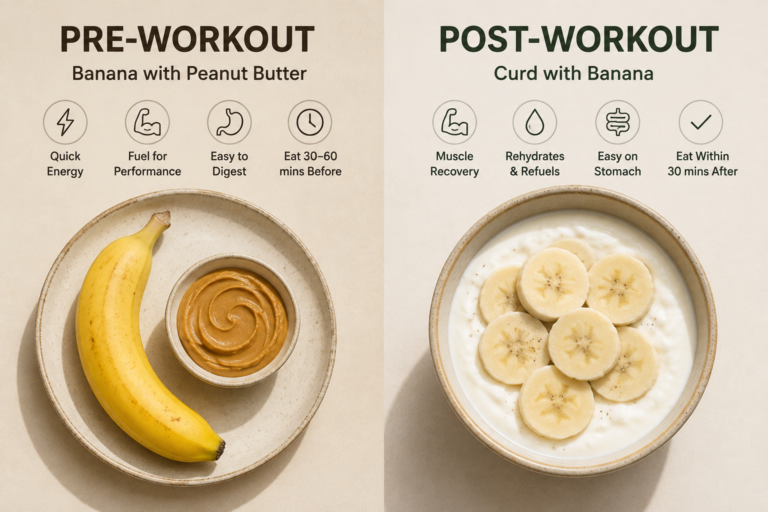
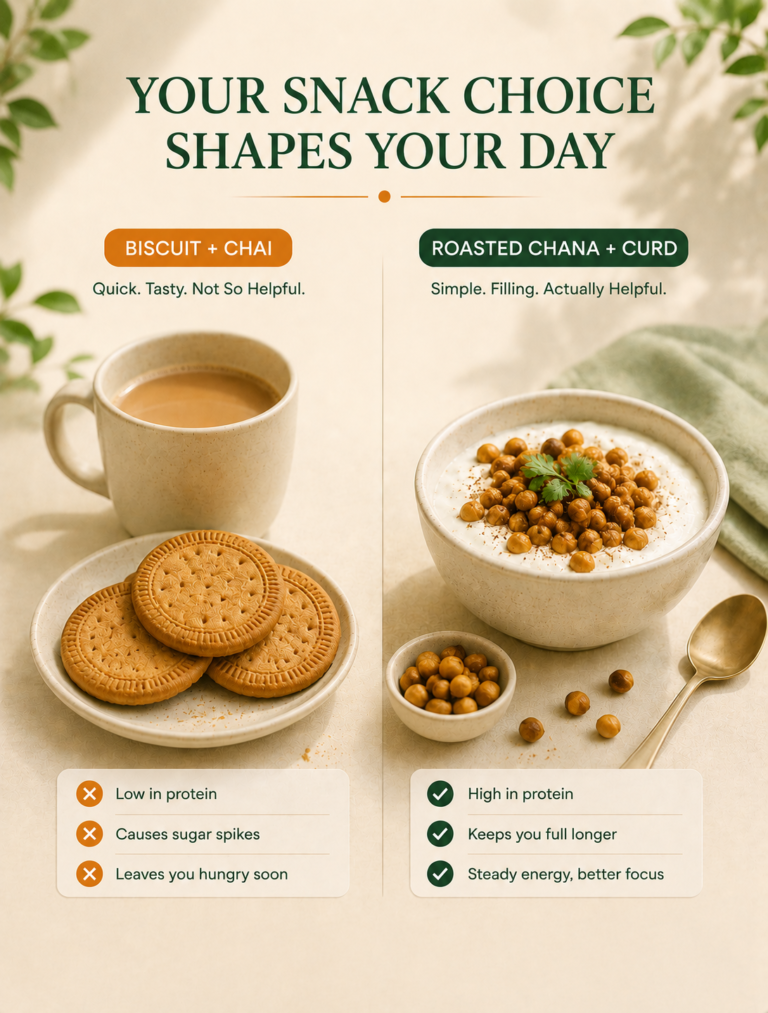
Do not train on dehydration or survive on tea and biscuits. Have a light snack before training if needed, drink water, and eat a protein-rich meal or snack afterward.
Internal link spot: Link “light snack before training” and “protein-rich meal or snack afterward” to Article 8: Pre-Workout and Post-Workout Nutrition for Beginners.
When to stop and seek help
Stop exercising and seek medical advice if you get chest pain, faintness, unusual shortness of breath, severe dizziness, or sharp and persistent joint pain.
A little muscle soreness after a new workout is normal. Sharp pain, swelling, numbness, or pain that worsens each day is not something to push through.
Frequently asked questions
Can I lose weight with home workouts only?
Yes, home workouts can support weight loss when combined with a balanced calorie intake, regular movement, sufficient protein, and consistency. Your daily habits matter more than whether you exercise at home or in a gym.
How long should a beginner work out at home?
Start with 20–25 minutes, three times per week. Short workouts that you complete consistently are more effective than overly long workouts you avoid after one week.
Will bodyweight workouts make me bulky?
No. Building a large amount of muscle requires long-term progressive heavy training, a high-calorie intake, and consistent effort. For beginners, bodyweight strength training usually improves strength, posture, and muscle tone.
What if I cannot do lunges or push-ups?
Use the easier versions. Replace lunges with chair squats and use wall push-ups instead of floor push-ups. Your workout should challenge you while still feeling safe.
Final thoughts
You do not need a perfect body, a gym membership, or a complicated plan to begin. Start with three short workouts this week, focus on good form, and add a little more only when you are ready.
The goal is not to destroy yourself in one workout. The goal is to become the woman who keeps showing up for herself.
One Comment