How Many Steps a Day for Fat Loss? Realistic Targets for Women
If you have ever looked at your fitness tracker and felt guilty because you did not reach 10,000 steps, I want you to know something important:
You do not need to hit 10,000 steps every single day to improve your health or support fat loss.
Walking is one of the simplest and most underrated ways to become more active. It is free, beginner-friendly, gentle on the body, and easy to fit into a busy college, work, or family routine. But the “right” number of daily steps depends on your current activity level, health, schedule, and overall lifestyle.
For most women beginning a fat-loss journey, the best step goal is not a random high number. It is a realistic target that is slightly higher than your current average and that you can repeat consistently.
This article is for general education only and is not medical advice. If you have joint pain, heart-related symptoms, severe breathlessness, dizziness, are pregnant, or have a medical condition, speak with a doctor before substantially increasing your activity.
Affiliate Disclosure
Affiliate Disclosure: Some links in this article may be affiliate links. If you purchase through them, I may earn a small commission at no extra cost to you. I only recommend products that I would be comfortable suggesting to a close friend.
Do you really need 10,000 steps a day?
No. The 10,000-step goal is popular, but it is not a magic number or an official requirement for fat loss.
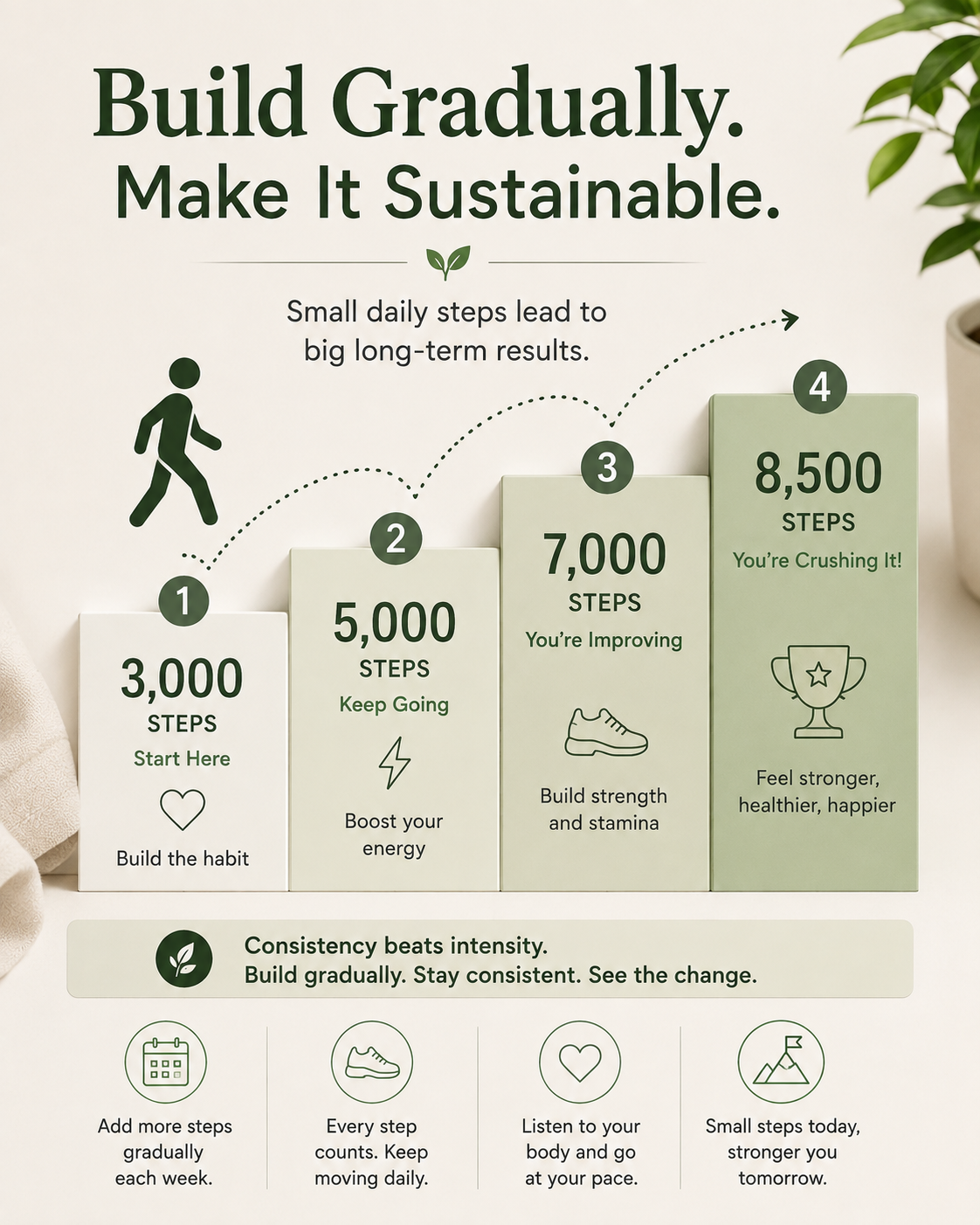
Health benefits begin well below 10,000 steps. Research summaries suggest that 7,000 steps a day can already provide meaningful health benefits compared with very low activity levels, while an adult’s step target should still be personalised to their fitness level and goals.
For fat loss and long-term weight management, a 2026 systematic review and meta-analysis of lifestyle-based weight-loss programs found that participants who increased their average activity toward about 8,500 daily steps and maintained it were more likely to maintain significant weight loss.
That does not mean you should jump from 2,000 steps to 8,500 tomorrow. It means 8,500 is a useful long-term target for many people—not a pass-or-fail rule.
The most realistic daily step targets
Use your current average as your starting point.
| Your current activity | Realistic first target | Long-term target |
|---|---|---|
| Under 3,000 steps a day | Add 1,000 steps | 5,000–7,000 steps |
| 3,000–5,000 steps a day | Add 1,500–2,000 steps | 6,000–8,000 steps |
| 5,000–7,000 steps a day | Add 1,000–1,500 steps | 7,500–8,500 steps |
| Above 7,000 steps a day | Add brisk walking sessions | 8,500–10,000 steps |
Instead of setting an unrealistic target, first track your normal steps for 5–7 days. Find your average, then add around 500–1,000 steps per day for the next two weeks. Gradual increases are easier on your feet, knees, and motivation.
For example:
- If you currently average 2,500 steps, aim for 3,500 first.
- If you already average 5,000 steps, aim for 6,000–6,500.
- If you average 7,000 steps, try to add a 15–20 minute brisk walk and move toward 8,000–8,500.
Why walking helps with fat loss
Walking burns energy, increases your daily calorie expenditure, and helps you become less sedentary. It is especially useful for women who find intense workouts intimidating or difficult to sustain.
But walking alone is not a magic fat-loss tool. Fat loss happens when your overall lifestyle supports a calorie deficit over time. Walking works best when it is combined with:
- Balanced meals and sensible portions
- Enough protein to support muscle and fullness
- Strength training two or more times each week
- Good sleep and stress management
- Consistency for weeks and months, not only a few days
Adults are generally encouraged to get at least 150 minutes of moderate-intensity activity each week, and brisk walking is one practical way to work toward that goal.
Steps versus walking intensity: what matters more?
Your total step count matters, but pace matters too.
Walking slowly around your home still counts and is much better than sitting all day. But a brisk walk gives your heart and lungs a greater challenge and helps you make better use of your dedicated walking time.
A simple test:
- If you can talk comfortably but cannot sing a full song, you are probably walking at a moderate or brisk pace.
- If you are barely breathing harder than normal, increase your pace slightly when safe.
- If you cannot speak more than a few words, slow down.
A practical goal for many women is to include 20–30 minutes of brisk walking on most days, then let regular activities—housework, commuting, college walking, errands, stairs, and movement around home—add to the total step count. The broad public-health goal is based on weekly minutes of moderate movement, not a strict daily step number.
A 4-week step plan for beginners
This plan works best if you currently average fewer than 5,000 steps a day.
Week 1: Find your starting point
- Track your regular steps for 5–7 days.
- Do not change everything yet.
- Add one 10-minute walk after lunch or dinner on at least four days.
- Focus on wearing comfortable shoes and simply noticing your routine.
Week 2: Add 1,000 steps
- Add around 1,000 steps above your Week 1 average.
- Take a 10–15 minute walk after one meal each day.
- Park slightly farther away, take stairs when comfortable, or walk while taking calls.
Week 3: Add a brisk-walk block
- Keep your added steps.
- Include 15–20 minutes of brisk walking on 4–5 days.
- If you are comfortable, walk for one minute faster, then one minute at your normal pace. Repeat this 5–8 times.
Week 4: Build your sustainable target
- Aim for 6,000–7,000 daily steps if you started very low.
- If you were already moderately active, work toward 7,500–8,500 steps.
- Choose a target you can maintain even during a busy week.
Do not worry if every day is not perfect. Weekly averages matter more than a single low-step day.
Easy ways to add more steps without “working out”
You do not always need a formal walking session. Small movement breaks matter too.
Try these realistic ideas:
- Walk for 10 minutes after lunch or dinner
- Get off public transport one stop earlier if it is safe
- Take the stairs for one or two floors
- Walk around while taking phone calls
- Have a five-minute movement break after every hour of sitting
- Do one extra round of household movement: sweeping, organising, or putting away laundry
- Walk with a friend, sibling, or colleague instead of sitting for a catch-up
- Put on music and walk indoors while waiting for food to cook
- Make weekend errands a walking opportunity when possible
A 10-minute walk after meals is often easier to maintain than trying to find a full hour at the end of an exhausting day.
Can walking reduce belly fat?
Walking supports overall fat loss, which can eventually reduce belly fat. However, no walking routine can target fat loss only from the stomach.
Your body decides where it loses fat first, and this varies from person to person. Do not use your stomach as the only measure of progress.
Also track:
- Waist and hip measurements
- How your clothes fit
- Your energy level
- Your walking pace and stamina
- Your weekly average step count
- Your strength in workouts
A consistent walking habit, combined with nutrition and strength training, is far more effective than trying to do extreme cardio for a few days.
Should you walk every day?
For most healthy beginners, gentle walking can be done daily. Your dedicated brisk walking sessions can be 4–6 days per week, while easy movement fills the rest of your days.
Take an easier day if your feet, ankles, knees, or hips feel sore. Rest is part of a sustainable routine—not a failure.
If you are new to activity, avoid suddenly doing very long walks or high-impact jump workouts every day. Build slowly.
Track your steps without becoming obsessed
You can use:
- Your phone’s built-in health app
- A simple fitness watch or band
- A pedometer
- A basic daily note in your phone
You do not need an expensive smartwatch to walk more.
Use your tracker as a tool, not a judge. A lower-step day may simply mean you were working, travelling, unwell, or resting. Your goal is to learn your baseline and gently improve over time.
Common walking mistakes to avoid
Starting at 10,000 steps immediately
A huge jump in steps can lead to sore feet, shin pain, or burnout. Add steps gradually.
Only walking very slowly
Easy movement still counts, but adding some brisk walking is more useful for cardiovascular fitness and your 150-minute weekly activity goal.
Ignoring footwear
Worn-out sandals or poorly fitting shoes can make walking uncomfortable. Choose supportive, comfortable footwear, especially if you walk outdoors often.
Treating steps as permission to overeat
Walking is healthy, but it does not cancel out an entire day of excess snacking, sugary drinks, or large portions. Think of walking as part of your routine—not punishment for food.
Skipping strength training
Walking is excellent, but strength training helps preserve muscle during fat loss and builds a stronger body. Keep at least two strength sessions in your week.
Frequently asked questions
Is 5,000 steps a day enough for fat loss?
It can be a very good starting point, especially if you were less active before. The best target is one you can sustain and gradually improve. If your goal is fat loss, many women may eventually benefit from building toward 7,000–8,500 steps alongside good nutrition and strength training.
Is 10,000 steps a day necessary?
No. Ten thousand steps is a popular target, not a magic requirement. Many health benefits appear at lower levels, and recent weight-management research points to around 8,500 daily steps as a useful, sustainable target for many adults.
How many steps should I walk to lose 1 kg?
There is no exact step number that guarantees 1 kg of fat loss. Results depend on your food intake, body size, walking pace, current activity, sleep, hormones, and consistency. Focus on your weekly habits instead of trying to calculate an exact number.
Can I get steps by walking inside my house?
Yes. Indoor walking, climbing stairs, moving during housework, and short walking breaks all count. The goal is to reduce sitting time and increase regular movement.
Final thoughts
You do not need to chase 10,000 steps from Day 1. Start from where you are, add a little more movement each week, and aim for a step goal that fits your real life.
For many women, consistently moving toward 7,000–8,500 steps a day, including a little brisk walking, is a much more powerful habit than doing an extreme fitness challenge and quitting after one week.