Hydration & Moderation: Simple Habits for Everyday Health
Healthy living often sounds complicated.
People are told to drink huge amounts of water, completely stop sugar, avoid every “unhealthy” food, carry expensive electrolyte drinks, and follow strict wellness rules every day.
But most people do not need extremes.
Two of the most useful health habits are much simpler:
- Drink fluids regularly enough to stay hydrated
- Enjoy food and drinks in moderation instead of following all-or-nothing rules
Hydration supports normal body functions, energy, digestion, concentration, exercise, and temperature control. Moderation helps you build a way of eating that you can actually continue—not a short-term plan that feels punishing.
This guide explains how to stay hydrated, how to recognise common signs of dehydration, which drinks can fit into a healthy routine, and how to approach sugar, caffeine, alcohol, and treats without guilt or extreme restrictions.
This article is for general wellness education only and is not medical advice. If you have kidney disease, heart failure, diabetes, are taking diuretics or fluid-restricting medication, are pregnant, breastfeeding, or have another medical condition that affects fluid needs, ask a qualified healthcare professional for personal guidance.
Why hydration matters
Water is involved in many everyday functions in the body.
It helps support:
- Body-temperature regulation
- Digestion
- Circulation
- Joint comfort
- Transport of nutrients
- Removal of waste
- Physical performance
- Concentration and alertness
You lose fluid throughout the day through urine, sweat, breathing, and bowel movements. In hot weather, during exercise, when you are ill, or after sweating heavily, you may need more fluids than usual.
You do not need to obsessively measure every sip. The goal is to drink regularly and pay attention to simple signals from your body.
How much water do you really need?
There is no single perfect number for everyone.
Your needs change based on:
- Age
- Body size
- Weather and humidity
- Physical activity
- Sweat loss
- Pregnancy or breastfeeding
- Medical conditions
- Medications
- How much water-rich food you eat
A practical public-health guide is around 6–8 cups or glasses of fluid per day for many adults. This is roughly 1.5–2 litres, though some people may need more.
The National Academies’ adequate intake estimates for total water—including water from foods and all beverages—are around 2.7 litres daily for adult women and 3.7 litres daily for adult men. These are population-level guides, not personal prescriptions, and water-rich foods can contribute around 20% of total intake.
Instead of chasing one number, use these practical checks:
- Drink regularly throughout the day
- Drink more in hot weather or when exercising
- Aim for urine that is usually pale yellow
- Notice if you feel thirsty, tired, headachy, or light-headed
- Speak with a clinician if your fluid needs are medically restricted
Signs you may need more fluids
Mild dehydration can happen easily when you are busy, travelling, working long hours, fasting, sick, or exercising in heat.
Common signs include:
- Feeling thirsty
- Dark-yellow or strong-smelling urine
- Urinating less often than usual
- Dry mouth, lips, or tongue
- Headache
- Feeling tired
- Feeling dizzy or light-headed
- Dry eyes or skin
- Difficulty concentrating
Dark and strong-smelling urine is one useful sign that you may need more fluids. Pale-yellow urine is generally a practical sign that you are drinking enough.
However, urine colour can also be affected by vitamins, medication, foods, and medical conditions. If you are concerned about ongoing symptoms, speak with a healthcare professional.
The easiest hydration habit: drink regularly
The best hydration routine is one you do without stress.
You do not need to wait until you are extremely thirsty. Try drinking small amounts at regular points in your day.
A simple hydration rhythm
- One glass after waking
- One glass with breakfast
- Keep a water bottle visible during work, study, or travel
- One glass before or with lunch
- One glass during the afternoon
- Water around exercise or outdoor activity
- One glass with dinner
This is only a template. Adjust it based on your needs, thirst, meals, activity, and climate.
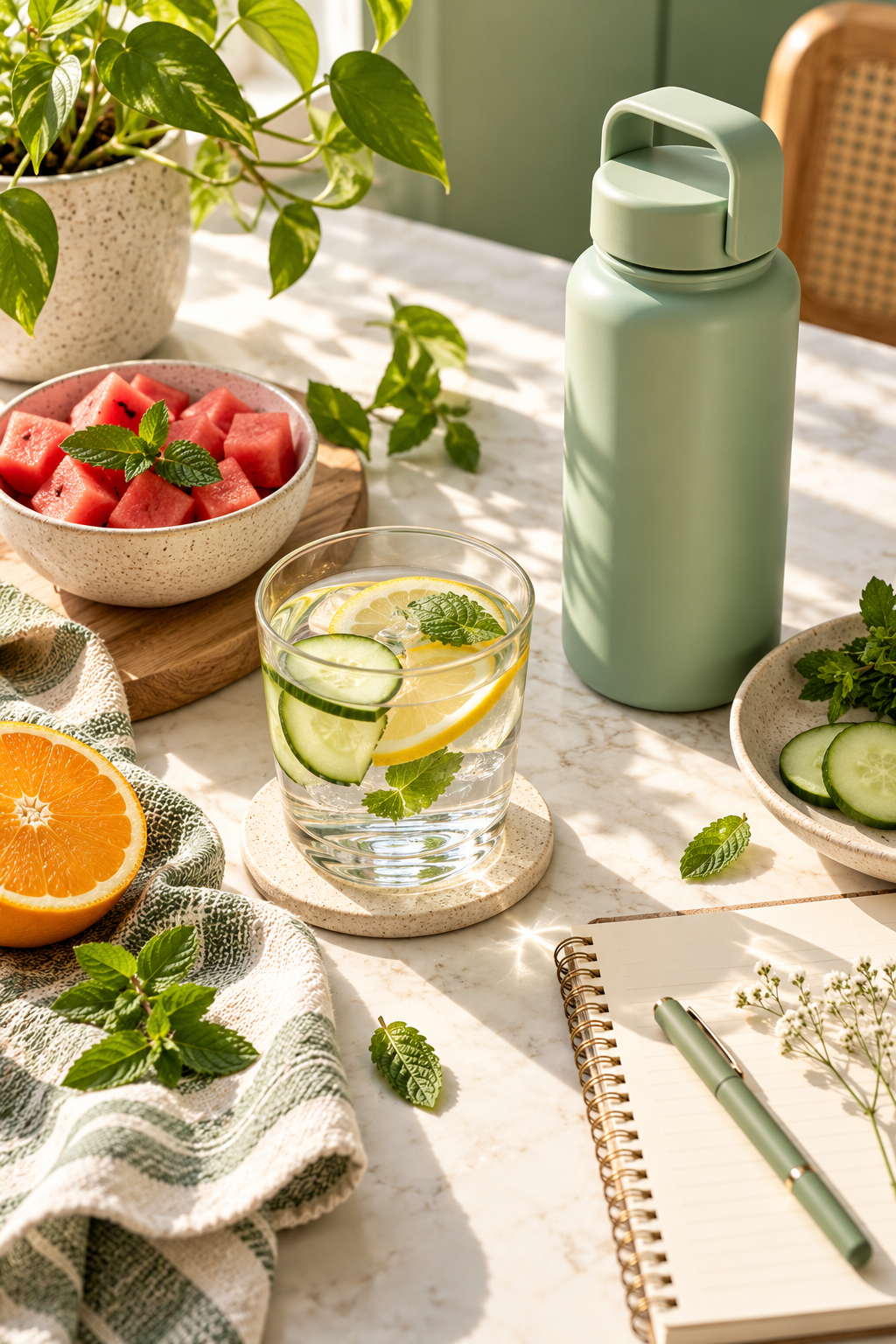
If plain water feels boring, use a bottle you like, drink it cool or room temperature, add lemon or cucumber slices, or try unsweetened infused water.
What counts toward hydration?
Water is an excellent everyday choice, but it is not the only source of fluid.
Good everyday options
- Plain water
- Sparkling water without added sugar
- Unsweetened lemon water
- Buttermilk or chaas with limited added salt
- Coconut water occasionally, especially in heat
- Milk or suitable dairy alternatives
- Herbal tea
- Tea or coffee in moderate amounts
- Soups
- Water-rich foods such as cucumber, watermelon, muskmelon, oranges, tomatoes, berries, leafy greens, and curd
Water-rich foods can contribute to hydration, especially fruits and vegetables.nutritionsource.
Drinks to enjoy less often
- Soft drinks
- Energy drinks
- Sweetened iced tea or coffee
- Packaged fruit drinks
- Flavoured milk drinks
- Very sugary smoothies
- Alcoholic drinks
- Large amounts of sweetened chai or coffee
These are not “forbidden.” The key is to avoid making them your main source of fluid.
Hydration during exercise
If you are doing a normal gym workout, walking, yoga session, or home workout for under an hour, plain water is enough for most people.
Drink before, during, and after activity according to thirst and sweat loss.
You may need extra fluids if you:
- Exercise for a long time
- Sweat heavily
- Train outside in very hot or humid weather
- Do endurance workouts
- Have vomiting or diarrhoea
- Feel dizzy, very thirsty, or unusually tired
For longer or very sweaty activity, a doctor, sports dietitian, or qualified coach may suggest a hydration or electrolyte strategy based on your individual needs.
Do not assume every workout requires expensive sports drinks. Many gym sessions do not.
Do you need electrolytes every day?
Usually, no.
Electrolytes are minerals such as sodium, potassium, magnesium, and calcium. They support fluid balance, nerve signalling, and muscle function.
For most people, everyday meals plus water provide enough electrolytes. You may benefit from extra support during prolonged, intense exercise, extreme heat, illness involving fluid loss, or other specific situations.
If you choose an electrolyte drink, check:
- Added sugar
- Sodium amount
- Serving size
- Whether it is actually needed for your activity level
- Whether it fits any medical advice you have been given
Electrolytes are useful in the right situation, but they are not a daily requirement for everyone.
Moderation: the habit that makes healthy eating sustainable
Moderation means enjoying foods and drinks without letting them become the main part of your routine.
It does not mean being perfect.
You can eat nutritious meals most of the time and still enjoy:
- A cold coffee sometimes
- Restaurant food on weekends
- Festival sweets
- Birthday cake
- Pizza with friends
- A soft drink occasionally
- Chai with family
- Your favourite dessert
The goal is to build a healthy pattern, not create food guilt.
A helpful question is:
“What does my usual week look like?”
One dessert does not ruin your nutrition. But sugary drinks, fried snacks, and highly processed foods every day may gradually push healthier choices out of your routine.
Understanding added sugar and free sugars
Free sugars include:
- Sugar added to tea and coffee
- Sugar in soft drinks and energy drinks
- Sugar in packaged desserts and sweets
- Sugar in many flavoured yogurts and flavoured milks
- Sugars in syrups, honey, and fruit juice
- Sugar in packaged fruit drinks and sweetened beverages
Whole fruit is different because it contains fibre and other nutrients. Fruit juice, smoothies, and purées can still provide a high amount of sugar quickly, even if no sugar is added.
WHO recommends reducing free sugars to below 10% of total daily energy intake, with a further reduction below 5% offering additional health benefits. For many adults, 5% is around 25 grams—or roughly 6 teaspoons—of free sugar per day.
You do not need to calculate every gram forever. Start by noticing your biggest sources of added sugar.
For many people, this includes:
- Multiple teaspoons of sugar in chai or coffee
- Daily soft drinks
- Packaged juices
- Sugary breakfast cereals
- Desserts after every meal
- Energy drinks
- Biscuits and bakery snacks
Practical ways to reduce added sugar without feeling deprived
Reduce sugar slowly
If you add two teaspoons of sugar to tea, try one and a half for a week. Then reduce again if you want to.
Sudden strict rules often feel harder to maintain.
Choose whole fruit more often than juice
A whole orange, apple, guava, banana, or bowl of papaya gives you fibre and takes longer to eat than juice.
Keep sugary drinks occasional
Make water your default drink. Save cold drinks, packaged juices, and sweetened coffee for occasions you genuinely enjoy.
Read drink labels
Some “healthy” drinks contain a surprising amount of added sugar. Check the sugar per serving and the number of servings in the bottle.
Pair treats with normal meals
You do not need to “earn” a dessert by starving all day. Eat balanced meals, then enjoy a treat mindfully when you want one.
What does moderation look like with caffeine?
Tea and coffee can fit into a healthy lifestyle for many people.
But too much caffeine—or caffeine too late in the day—can make some people feel anxious, restless, shaky, or unable to sleep.
Try these simple boundaries:
- Notice how caffeine affects your sleep
- Avoid relying on energy drinks for everyday tiredness
- Reduce sugar added to tea or coffee gradually
- Choose a smaller serving if you get jitters
- Move your last tea or coffee earlier if sleep is difficult
- Remember that chocolate, cola, and some pre-workout products can also contain caffeine
If you are pregnant, breastfeeding, have anxiety, heart concerns, or take certain medications, ask a healthcare professional for advice about caffeine.
What does moderation look like with alcohol?
Alcohol is not a hydration tool, workout recovery drink, or sleep solution.
It can affect hydration, sleep quality, judgment, appetite, medication safety, and mental health. Some people choose not to drink at all, and that is completely valid.
If you drink alcohol, keep it occasional, avoid binge drinking, eat food, drink water alongside it, and never drive or operate machinery afterward.
If alcohol feels difficult to control or is affecting your life, seek confidential support from a healthcare professional or trusted service.
A simple “hydration and moderation” day
Here is an example of what a balanced day might look like. Adapt it to your needs.
Morning
- One glass of water after waking
- Breakfast with water, milk, tea, or coffee with limited added sugar
Work or college hours
- Keep a water bottle nearby
- Drink small amounts throughout the day
- Choose fruit, curd, roasted chana, or nuts over daily sugary drinks
Lunch
- Water with your meal
- Include vegetables, protein, and carbohydrates
- If you enjoy a cold drink, choose it occasionally rather than automatically
Exercise or outdoor time
- Drink water before and after
- Carry water if you will be out in the heat
- Add extra fluids if you sweat heavily
Evening
- Tea, coffee, or herbal tea if it suits you
- Keep late-night caffeine limited if sleep is difficult
- Eat dinner without feeling pressured to be “perfect”
This approach is flexible, not restrictive.
Common hydration mistakes
Waiting until you are extremely thirsty
Thirst is a useful signal, but regular fluids throughout the day may help you avoid feeling drained or headachy.
Drinking huge amounts of water all at once
You do not need to force several litres in one sitting. Spread fluids across the day.
Treating every drink as equal
Water, sugary soda, energy drinks, and alcohol do not have the same effect on your health. Make water your main drink and treat sugary beverages as occasional choices.
Using sugary drinks as a replacement for meals
Sweet drinks can add calories without making you feel full. Pair fluids with real meals and snacks when you are hungry.
Overusing electrolyte products
Most short or moderate workouts do not require daily electrolyte powders. Choose them based on actual sweat loss and activity, not marketing.
Assuming “natural” drinks are always low in sugar
Honey drinks, packaged juices, smoothies, flavoured coconut water, and fruit concentrates can still contain substantial sugar. Read labels and enjoy them in moderation.
When to seek medical help
Seek medical advice if you:
- Cannot keep fluids down because of vomiting
- Have severe diarrhoea
- Feel confused, faint, extremely weak, or unusually drowsy
- Have signs of severe dehydration
- Have symptoms that do not improve after drinking fluids
- Have a health condition that affects fluid balance
- Are caring for an infant, older adult, or medically vulnerable person with dehydration symptoms
Seek urgent medical care if dehydration symptoms are severe or you feel unsafe.
Frequently asked questions
How much water should I drink daily?
Many adults can use 6–8 cups or glasses of fluid daily as a starting guide. Your actual needs may be higher in heat, during exercise, illness, pregnancy, breastfeeding, or heavy sweating. Use thirst and pale-yellow urine as practical clues.
Is clear urine always better?
Not necessarily. Pale yellow is usually a useful goal. Completely clear urine all the time may mean you are drinking more than you need. If you have medical concerns about urination or hydration, speak with a healthcare professional.
Does tea and coffee count toward hydration?
Tea and coffee can contribute to fluid intake, but water should remain your main everyday drink. Be mindful of caffeine and added sugar, especially later in the day.
Is fruit juice as good as water?
Fruit juice can contribute fluid, but it can also contain a lot of free sugar. Whole fruit is usually a better everyday choice because it provides fibre. Keep juice portions moderate.
Should I drink electrolyte drinks after every workout?
Usually not. For most normal workouts, water is enough. Electrolytes may be helpful after long, intense, or very sweaty activity, in extreme heat, or during illness with fluid loss.
Can I still enjoy sweets and soft drinks?
Yes. Moderation means you can enjoy them sometimes without making them an everyday habit. Focus on your overall routine rather than one food or drink.
Final thoughts
You do not need to drink an extreme amount of water or remove every enjoyable food from your life to be healthy.
Start with the basics: drink regularly, make water your usual choice, notice simple signs of dehydration, reduce sugary drinks gradually, and enjoy treats without guilt or all-or-nothing thinking.
Hydration and moderation are not strict rules. They are everyday habits that help you feel better, more balanced, and more able to care for your health.