Stress-Relieving Routines: Short, Calming Activities for Busy Workdays
A busy day can make stress feel unavoidable.
You wake up, rush through breakfast, answer messages, work or study for hours, deal with calls, deadlines, traffic, family responsibilities, and a never-ending list of things to do. By evening, your mind feels full—even if you have been sitting at a desk all day.
The good news is that stress relief does not have to mean taking a full day off, booking a retreat, or spending an hour meditating.
A few short, calming routines can help you pause, reset your attention, release physical tension, and return to your next task feeling a little more steady. You can do many of them at your desk, during a lunch break, while waiting for tea, or between classes.
This article shares simple stress-relieving routines that fit into real life. Choose one or two that feel manageable, and repeat them consistently.
This article is for general wellness education only and is not medical advice. If stress, anxiety, low mood, panic, sleep problems, or burnout are severe, persistent, or affecting your daily functioning, please speak with a qualified mental-health professional or healthcare provider.
Why short stress breaks can help
When you are stressed, your body may feel tense, your breathing may become shallow, and your mind may jump quickly from one worry to another.
A short pause interrupts that pattern.
Mindfulness and relaxation practices can be as simple as focusing on your breath for one minute, noticing your body in the chair, or walking slowly while paying attention to your surroundings. Mayo Clinic notes that focused breathing can be done anywhere—while sitting, standing, or walking—and may help you pause and regain clarity.
Short active breaks can also help reduce the feeling of being stuck at a desk all day. Research on employee active-break programs includes brief movement, stretches, and controlled breathing as realistic workplace strategies for physical and mental well-being.
You do not have to “empty your mind.” The goal is simply to give your nervous system a small moment of recovery.
1. The one-minute breathing reset
This is one of the easiest routines because you can do it almost anywhere: at your desk, in a washroom break, before a meeting, in a classroom, or while waiting for your food.
How to do it
- Sit or stand comfortably.
- Relax your shoulders and unclench your jaw.
- Breathe in gently through your nose for around 4 seconds.
- Breathe out slowly for around 6 seconds.
- Repeat for 6–10 breaths.
Do not force a huge breath. Gentle, slow breathing is enough.
A slightly longer exhale can feel calming for many people. You can use a comfortable 3-second inhale and 6-second exhale, or 4 seconds in and 6 seconds out—whatever feels natural and does not make you dizzy.healthnz.
Best times to use it
- Before sending an emotional message
- Before a presentation, interview, or meeting
- When you feel overwhelmed by notifications
- During a commute
- Before lunch
- Before going to sleep
If counting makes you more anxious, skip the numbers. Just focus on making the exhale a little slower than the inhale.
2. The two-minute desk reset
Sitting for long periods can build tension in your neck, shoulders, upper back, hips, and jaw.
This quick reset is useful when you have been staring at a laptop, phone, or study material for too long.
How to do it
- Put both feet flat on the floor.
- Sit tall but relaxed.
- Roll your shoulders backward slowly 10 times.
- Gently turn your head to look over one shoulder, then the other.
- Stretch your arms overhead and take one slow breath.
- Open and close your hands 10 times.
- Take five slow breaths before returning to work.
Keep all movements comfortable. Do not force your neck into deep stretches or roll it aggressively.
Why it helps
Physical stress often shows up as tight shoulders, hunched posture, clenched hands, and jaw tension. A brief posture and movement reset can help you notice and release that tension before it becomes a headache or body ache.
3. The 5-minute lunch-break walk
A short walk is one of the best ways to create a mental break without needing special equipment.
You do not need to walk fast or turn it into a workout. The goal is simply to step away from your screen, desk, or study space.
How to do it
- Walk outside, around your office floor, college campus, terrace, building, or nearby lane.
- Keep your phone in your pocket if possible.
- Notice three things you can see.
- Notice two sounds you can hear.
- Feel your feet touching the ground.
- Take a few slower breaths while you walk.
Mindful walking involves paying attention to the sensations of standing, balancing, and moving rather than only replaying worries in your head.
Make it easier
If you cannot leave your desk area, walk around the room for two minutes. Even a small movement break is better than no break.
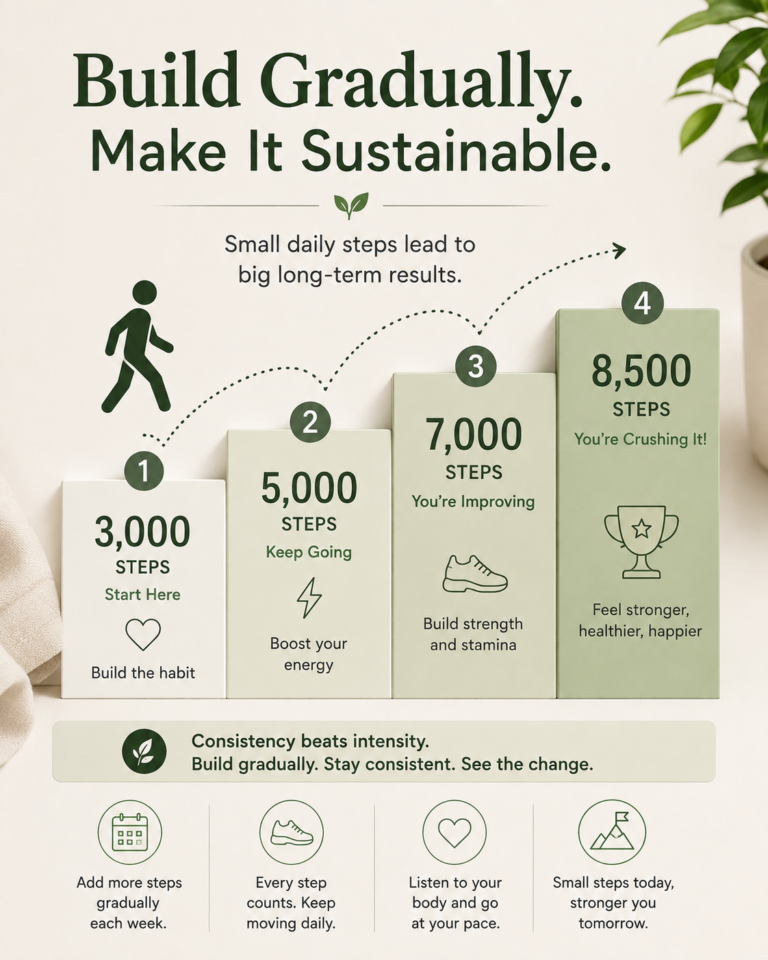
Related idea: Combine this with your daily step goal. A 5–10 minute walk after lunch can support your movement routine as well as give your mind a reset.
4. The 5-4-3-2-1 grounding routine
This routine can be useful when your thoughts are racing or you feel mentally overloaded.
It brings your attention back to your immediate surroundings.
How to do it
Look around and identify:
- 5 things you can see
- 4 things you can feel
- 3 things you can hear
- 2 things you can smell
- 1 thing you can taste
For example, you may notice:
- Your laptop, water bottle, window, plant, notebook, and chair
- Your feet on the floor and your back against the chair
- A fan, traffic, or people talking
- Tea, perfume, food, or fresh air
- Water or a mint
You do not need to do this perfectly. The purpose is to pause the mental spiral and reconnect with what is happening around you right now.
5. The “one task only” reset
Sometimes stress is not caused by one huge problem. It is caused by trying to think about ten things at the same time.
When your task list feels overwhelming, try this simple routine.
How to do it
- Take one slow breath.
- Write down everything that is on your mind.
- Circle the one task that would make the biggest difference today.
- Break it into the smallest possible first step.
- Set a timer for 10–15 minutes.
- Work only on that step until the timer ends.
Examples of a first step:
- Open the presentation file
- Write the first email
- Read one page of notes
- Reply to one message
- Put laundry into the machine
- Make a simple lunch
This routine does not remove every responsibility. It helps you stop carrying every responsibility in your mind at once.
6. The three-minute body scan
A body scan helps you notice where you are holding physical tension.
You can do it sitting at your desk, on a chair during lunch, or lying down before bed.
How to do it
- Sit comfortably and place both feet on the floor.
- Take one gentle breath in and out.
- Notice your forehead. Is it tight? Let it soften.
- Notice your jaw. Let your teeth separate slightly.
- Notice your shoulders. Drop them away from your ears.
- Notice your hands. Unclench them.
- Notice your stomach. Allow it to relax.
- Notice your legs and feet resting on the ground.
- Return attention to your breathing for three more breaths.
Body-scan meditation involves moving attention deliberately through different parts of the body and gently returning attention when your mind wanders.
You are not trying to force relaxation. You are simply noticing what your body needs.
7. The “tea or water” mindfulness break
You may already make tea, coffee, or water during the day. Turn that normal habit into a short reset.
How to do it
For two minutes:
- Put your phone away.
- Notice the warmth or coolness of the cup.
- Take a slow sip.
- Notice the taste.
- Take three slow breaths before returning to your next task.
This is not about being overly serious or doing meditation perfectly. It is about creating one small quiet moment during a noisy day.
If you drink multiple cups of tea or coffee, try not to use caffeine as your only stress strategy. Too much caffeine can make some people feel more restless, jittery, or unable to sleep.
8. The 10-minute after-work transition routine
Work stress often follows us home because we move immediately from one responsibility to another.
A short transition ritual can create a clear mental boundary between work or college and personal time.
Try this routine
- Put your work bag, laptop, or books in one fixed place.
- Change into comfortable clothes.
- Drink water or have a light snack if you are hungry.
- Walk for 5–10 minutes, stretch, shower, or listen to one calming song.
- Avoid opening work messages immediately after this break unless something is urgent.
This is especially useful for remote workers. When you work from home, your brain may not get the usual signal that the workday has ended.
A small routine tells your mind: “That part of the day is finished. I can reset now.”
9. A simple neck, shoulder, and hand routine
If your stress comes with screen fatigue, use this quick movement sequence every few hours.
Shoulder stretch
- Bring one arm across your chest.
- Use the other arm to hold it gently.
- Hold for 15–20 seconds.
- Switch sides.
Chest opener
- Clasp your hands loosely behind your back, if comfortable.
- Gently draw your shoulders down and back.
- Keep your neck relaxed.
- Hold for 15–20 seconds.
Wrist stretch
- Extend one arm in front of you with palm facing outward.
- Use the other hand to gently guide your fingers back.
- Hold for 10–15 seconds.
- Switch sides.
Seated twist
- Sit tall in your chair.
- Place one hand on the opposite knee.
- Gently rotate your chest to one side.
- Hold for 10 seconds, then switch.
Do not stretch through sharp pain, tingling, numbness, or worsening discomfort.
10. The “notifications off” focus break
Constant pings can keep your body and brain in a stressed, reactive state.
Try a short notification break once or twice a day.
How to do it
- Put your phone face down or out of reach.
- Turn off non-essential notifications for 15–30 minutes.
- Close extra browser tabs.
- Work on one task.
- Check messages after the timer ends.
You do not need to disappear for hours. Even a short break from constant alerts can give your mind space to focus.
If you need to be available for family, work, or emergencies, keep calls on and silence only social-media notifications.
A realistic 15-minute lunch-break routine
If you have 15 minutes, try this:
| Time | Activity |
|---|---|
| Minutes 1–2 | Put your phone away and take six slow breaths |
| Minutes 3–7 | Take a short walk or move around your building |
| Minutes 8–10 | Eat or drink water slowly without scrolling |
| Minutes 11–13 | Do shoulder rolls, neck movements, and a gentle stretch |
| Minutes 14–15 | Write your one most important task for the afternoon |
This is not a strict rule. Use it as a simple reset framework when your day feels too full.
How to make stress relief a real habit
The best technique is not the most complicated one. It is the one you will actually repeat.
Try these practical habits:
- Set a reminder for one two-minute pause each morning and afternoon
- Take a five-minute walk after lunch three times per week
- Pair breathing exercises with an existing habit, such as tea time or before opening your laptop
- Keep a water bottle near your desk as a reminder to pause
- Create a short after-work transition routine
- Choose one screen-free break each day
- Keep a simple note of which routine genuinely makes you feel calmer
Start with one habit. Adding ten new “wellness routines” at once can become another source of stress.
When stress needs more support
Short routines can help with everyday stress, but they are not a replacement for mental-health support when you need it.
Please consider speaking with a qualified mental-health professional or healthcare provider if you experience:
- Persistent anxiety, panic, sadness, or hopelessness
- Frequent crying or anger that feels difficult to control
- Sleep problems most nights
- Loss of interest in normal activities
- Difficulty functioning at work, college, or home
- Thoughts of harming yourself or feeling unsafe
If you are in immediate danger or considering self-harm, contact local emergency services, a crisis helpline, or a trusted person nearby immediately.
Asking for professional support is a strength, not a failure.
Frequently asked questions
How can I relieve stress in five minutes at work?
Try a 1-minute breathing exercise, two minutes of shoulder and neck movement, and a 2-minute walk away from your desk. Short active breaks and focused breathing can be useful ways to reset attention during a workday.
What is the quickest calming breathing routine?
A simple option is breathing in gently for around 4 seconds and out slowly for around 6 seconds for one to three minutes. Do not force your breath or continue if you feel dizzy.
Can walking reduce stress?
A short walk can provide a mental break from screens, deadlines, and repetitive thoughts. Try walking without scrolling and pay attention to your steps, breathing, and surroundings.
What can I do when I feel overwhelmed at my desk?
Start with a one-minute breathing reset, write down everything you are thinking about, choose one small next task, and work on it for 10–15 minutes without checking notifications.
Do I need to meditate for 30 minutes to reduce stress?
No. A one-minute breathing exercise, short body scan, mindful drink break, or 5-minute walk can be a realistic place to begin. Regular short pauses can be more sustainable than an ideal routine you never use.
Final thoughts
You do not need to fix your whole life before you are allowed to feel calmer.
Start with one minute of slow breathing. Take a five-minute walk after lunch. Put your phone away while drinking tea. Relax your shoulders before you open your next email.
Small resets may look simple, but when you repeat them, they can help you create a calmer and more sustainable workday.