GLP-1 and Weight Management: What the Breakthrough Means—and What It Does Not
GLP-1 medicines have changed the conversation around weight management.
You may have seen terms such as Ozempic, Wegovy, Mounjaro, Zepbound, semaglutide, tirzepatide, or “weight-loss injections” everywhere online. Some people describe these medicines as breakthroughs because they can help eligible adults lose a significant amount of weight and improve metabolic health when used as part of medical care.
But the online conversation can be misleading.
GLP-1 medicines are not “quick-fix injections,” beauty products, or supplements that anyone should buy online. They are prescription treatments that affect appetite, digestion, blood sugar, and the brain’s hunger signals. They can be very useful for some people, but they also have side effects, important safety limitations, costs, access barriers, and a need for long-term medical follow-up.
The most balanced way to understand GLP-1 therapy is this:
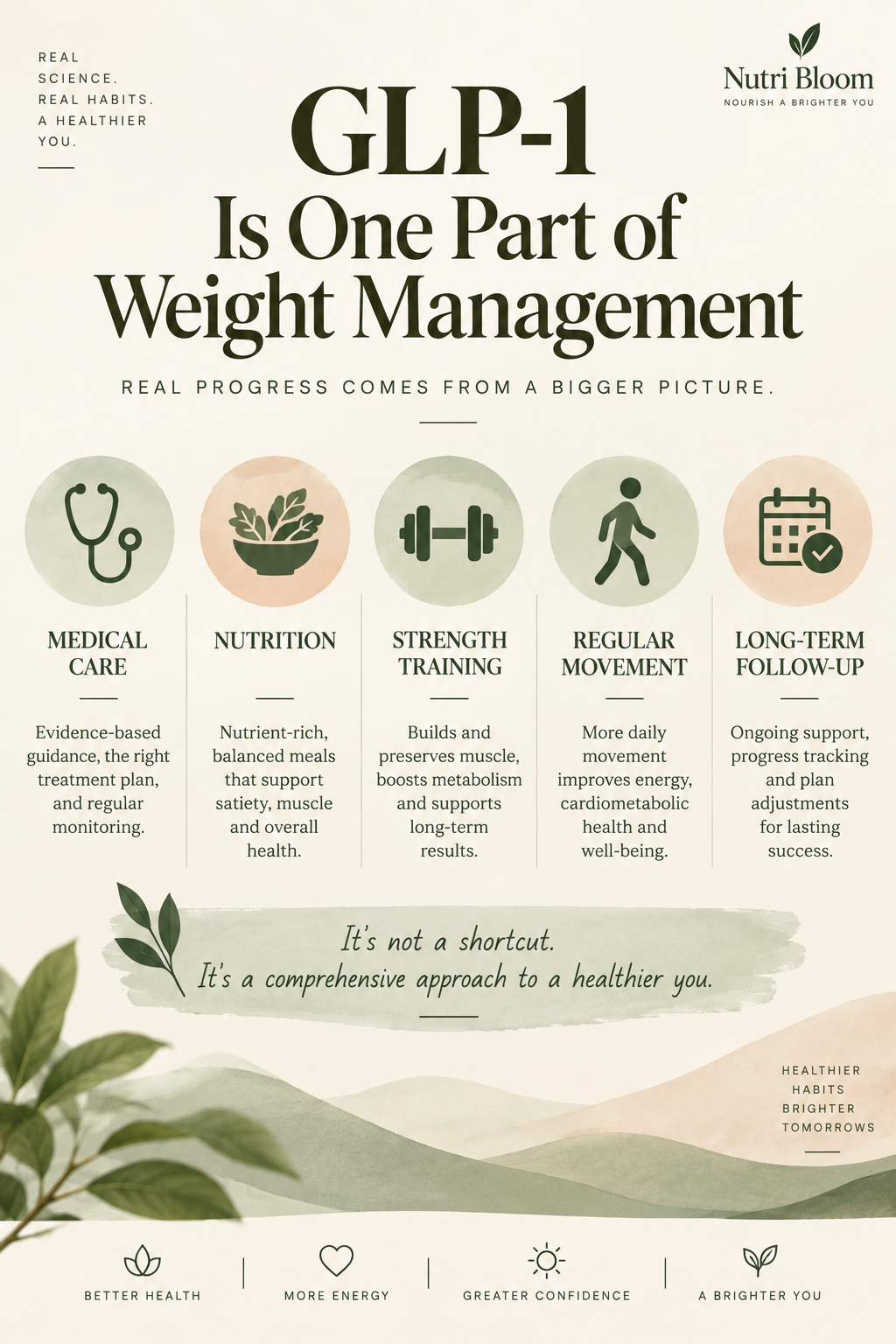
It can be a valuable tool in obesity treatment for some adults—but it does not replace food, movement, strength training, sleep, mental-health support, or medical care.
The World Health Organization’s 2025 guideline conditionally supports GLP-1-based therapies as a long-term treatment option for adults living with obesity, while emphasising that they should be part of comprehensive care that includes healthy eating, regular physical activity, behavioural support, and healthcare follow-up.
This article is for general education only and is not medical advice. Do not start, stop, share, buy, or change the dose of any GLP-1 medicine without guidance from a qualified doctor. Seek personal medical advice if you are considering weight-management medication.
What are GLP-1 medicines?
GLP-1 stands for glucagon-like peptide-1. It is a hormone your body naturally produces after you eat.
GLP-1-based medicines are designed to imitate or enhance some of the effects of this hormone. Depending on the medicine, they may help:
- Reduce appetite
- Increase feelings of fullness
- Slow stomach emptying
- Improve blood-sugar regulation
- Reduce food noise or persistent thoughts about food for some people
- Support weight reduction alongside lifestyle and clinical care
Some medicines are called GLP-1 receptor agonists, while others combine GLP-1 activity with another hormone pathway called GIP. Examples covered by WHO’s obesity guidance include liraglutide, semaglutide, and tirzepatide.
Different medications, doses, and formats are not interchangeable. Some are injected daily, some weekly, and emerging or approved oral options have their own specific instructions and safety information.
Why are GLP-1 medicines considered a breakthrough?
For many years, obesity treatment was often reduced to one message: “eat less and move more.”
Healthy eating and movement still matter. But obesity is now widely understood as a chronic, complex, and relapsing health condition affected by biology, appetite regulation, genetics, sleep, stress, medicines, environment, mental health, and access to healthcare—not simply a lack of discipline.
WHO’s guideline describes obesity as a chronic, relapsing disease that needs long-term, integrated, person-centred care.pubmed.
GLP-1 medicines are considered important because clinical research has shown that some eligible adults can achieve more meaningful weight loss than with lifestyle changes alone. A 2025 systematic review reported strong weight-management efficacy for semaglutide 2.4 mg and tirzepatide across adults with obesity or overweight, with or without diabetes.
However, a medicine working for some people does not mean it is the correct choice for everyone.
What results are realistic?
The amount of weight loss varies widely from person to person.
It depends on:
- The specific medicine and dose
- How long treatment continues
- Whether the person has diabetes or other health conditions
- Nutrition, physical activity, sleep, stress, and support
- Side effects and ability to remain on treatment
- Access, affordability, and follow-up care
In research settings, GLP-1 and related medicines have been associated with average weight reductions that can be substantial. Reports on newer medicines have described average reductions roughly in the 15% to 20%+ range in some trials, but results cannot be guaranteed for an individual person.pmc.
It is important not to compare yourself to dramatic “before and after” social-media posts. Some posts do not show the full story: dose changes, side effects, medical conditions, nutrition support, strength training, cost, or what happened after the medicine was stopped.
The right goal is not a specific number from someone else’s transformation. The right goal is better health, physical function, energy, metabolic markers, and a sustainable care plan decided with a clinician.
Who may be eligible for GLP-1 weight-management treatment?
Eligibility is a decision for a qualified doctor. It usually depends on body mass index, weight-related health conditions, medical history, current medicines, pregnancy plans, and the availability of appropriate monitoring.
WHO’s current guidance says GLP-1 therapies may be considered as a long-term treatment option for adults with obesity, generally described as a BMI of 30 or higher.
In some regulatory settings, certain medicines may also be prescribed for adults with a BMI of 27 or above when they have at least one weight-related health condition. This can include conditions such as type 2 diabetes, high blood pressure, or certain cardiovascular risks.
A doctor may assess:
- Your weight history and previous efforts
- Blood pressure, blood sugar, cholesterol, liver health, and other metabolic markers
- PCOS/PCOD, sleep apnea, diabetes, or other related conditions
- Current medications
- Eating patterns and relationship with food
- Mental-health history
- Pregnancy, breastfeeding, or pregnancy plans
- Whether you can access and continue appropriate follow-up care
Do not use online BMI information as a self-prescription tool. BMI is only one screening measure, and your overall health context matters.
Who should not use GLP-1 medicines without specialist advice?
GLP-1 medicines are not suitable for everyone.
WHO’s guidance does not cover use during pregnancy because these medicines have not been tested for that purpose; pregnant women are excluded from its recommendation.
You should speak with a doctor before considering any GLP-1 medicine if you are:
- Pregnant, breastfeeding, trying to conceive, or may become pregnant
- Under 18
- Living with kidney, liver, pancreas, or gallbladder conditions
- Taking insulin or certain diabetes medicines
- Managing an eating disorder or a history of disordered eating
- Experiencing unexplained severe stomach symptoms
- Taking multiple prescription medicines
- Planning surgery or a procedure that requires anaesthesia
- Concerned about a personal or family history of particular endocrine cancers
Some GLP-1 medicines carry warnings related to thyroid C-cell tumours based on rodent studies and are contraindicated for people with a personal or family history of medullary thyroid carcinoma or MEN2. Exact warnings vary by medicine and country, so discuss the official product information with your prescriber.workcompauto.
Common side effects and safety concerns
The most common side effects are usually digestive.
These can include:
- Nausea
- Vomiting
- Diarrhoea
- Constipation
- Stomach pain or bloating
- Indigestion
- Reduced appetite
- Feeling full very quickly
For many people, doctors reduce side effects by starting with a low dose and increasing gradually. But side effects can still be uncomfortable enough that some people need to stop or switch treatment.
More serious issues are less common but require medical attention. Depending on the specific medicine and individual situation, risks discussed in official safety information can include pancreatitis, gallbladder disease, dehydration-related kidney injury, and low blood sugar when certain medicines are combined.
Contact a clinician urgently if you experience severe or persistent abdominal pain, repeated vomiting, signs of dehydration, fainting, unusual symptoms, or any severe reaction after starting a new medicine.
Do not follow social-media dosage advice. Do not buy products from unverified sellers. Do not use a friend’s prescription.
Do GLP-1 medicines replace diet and exercise?
No.
The WHO explicitly states that GLP-1 therapies should not replace other methods of weight control. Healthy eating, regular physical activity, structured behavioural support, and long-term follow-up remain important parts of obesity care.
This is especially important because appetite reduction can make it easier to under-eat protein, fibre, vitamins, and minerals if meals are not planned carefully.
A supportive plan may include:
- Protein-rich meals to help protect muscle
- Fruits, vegetables, fibre, and adequate fluids
- Strength training to preserve muscle and physical function
- Regular walking or cardio for heart health
- Sleep and stress support
- A realistic approach to social occasions and long-term eating habits
- Follow-up with a doctor, dietitian, or qualified health professional
Medication may make it easier to follow these habits for some people. But the habits still matter.
Protein and strength training matter more during weight loss
Any significant weight loss can include some loss of lean body mass, not just fat.
That is why protein intake and resistance training are important for adults losing weight, whether they use GLP-1 medication or not. Strength training can help maintain muscle, improve function, and support a healthier body composition.
Beginner-friendly options include:
- Resistance-band workouts
- Bodyweight strength sessions
- Squats, rows, presses, glute bridges, and similar movements
- Gym sessions two or three times each week, based on your ability
- Daily walking or regular gentle movement
If reduced appetite makes eating difficult, speak with your care team instead of forcing yourself to follow an extreme low-calorie diet. A registered dietitian can help create a plan that includes enough protein, fluids, fibre, and important micronutrients.
What happens if someone stops GLP-1 medication?
This is one of the most important questions.
Obesity is often a chronic condition, and the effects of medication may reduce after it is stopped. Appetite can return, and some people regain weight if there is no ongoing care plan.
WHO’s guideline specifically highlights gaps in long-term evidence around maintenance and discontinuation, which is one reason its recommendations are conditional.
This does not mean treatment is pointless. It means the decision should include an honest discussion about:
- Expected duration of treatment
- Cost and availability over time
- Side-effect management
- Nutrition and strength-training support
- What the plan will be if medication is paused or stopped
- How follow-up and weight maintenance will work
Do not stop a prescription medicine suddenly without talking to the clinician who prescribed it.
GLP-1 myths to ignore
“GLP-1 injections are cheating”
No. Medical treatment for a chronic health condition is not cheating.
At the same time, medication is not morally “better” than lifestyle-only care. Different people need different levels of support. The correct choice is a personal medical decision.
“Everyone who wants to lose weight should take one”
No. These are prescription medicines for specific medical situations, not lifestyle products for casual or cosmetic weight loss.
“You can eat anything because the injection controls appetite”
No. Reduced appetite does not automatically provide enough protein, fibre, vitamins, minerals, or fluids. Nutrition quality still matters.
“You never need exercise if you use GLP-1 medication”
No. Regular movement and strength training are important for health, function, mood, and muscle preservation, even if weight loss occurs with medication.
“It permanently fixes weight without ongoing care”
Not necessarily. Weight management often requires long-term follow-up, and weight regain can happen when treatment stops.
“All GLP-1 medicines are the same”
No. Different medicines have different active ingredients, doses, approved uses, side-effect profiles, costs, and instructions. Only a qualified prescriber can decide what is appropriate for you.
A safe way to discuss GLP-1 treatment with a doctor
If you are considering medical support for weight management, take these questions to a qualified doctor:
- Am I medically eligible for a GLP-1-based treatment?
- What are the expected benefits for my health—not only for the scale?
- Which medicine, dose, and follow-up schedule would be appropriate for me?
- What side effects should I expect, and when should I contact you?
- How will this interact with my current medicines or medical conditions?
- What nutrition plan will help me maintain protein, fibre, hydration, and key nutrients?
- What exercise plan is safe and realistic for me?
- What happens if I cannot tolerate, afford, or continue the treatment?
- What is the plan for maintaining results long term?
- Should I also see a registered dietitian or mental-health professional?
A good medical conversation should feel respectful, evidence-based, and focused on your health—not shame.
Frequently asked questions
Are GLP-1 medicines approved for weight management?
Some GLP-1-based medicines are used or approved for chronic weight management in eligible adults, depending on the specific medicine and country. WHO’s 2025 guidance conditionally recommends GLP-1 therapies as a long-term option for adults living with obesity as part of comprehensive care.
Can GLP-1 medicines be used for people with PCOS/PCOD?
Some people with PCOS/PCOD may also have obesity, insulin resistance, or type 2 diabetes, and a doctor may consider different treatments depending on the full clinical picture. Do not start GLP-1 medication based on a PCOS diagnosis alone; treatment must be individualised by a clinician.
Do GLP-1 medicines cause muscle loss?
Weight loss can involve loss of lean mass as well as fat. Maintaining protein intake, doing resistance training, and working with a healthcare team can help protect muscle and function during weight loss.
Can I buy GLP-1 injections online?
Do not buy prescription medicines from unverified websites, social-media sellers, or informal sources. Counterfeit, incorrect-dose, or improperly stored products can be dangerous. Use medication only through legitimate medical care and authorised pharmacies.
Are GLP-1 medicines safe?
They can be appropriate and effective for some eligible adults under medical supervision, but they have side effects, contraindications, and monitoring needs. Safety depends on the specific medicine and individual medical history.
Are oral GLP-1 medicines coming?
Research and regulatory activity around oral weight-management medicines are evolving. For example, a 72-week trial of oral orforglipron reported greater average weight loss than placebo, but medication availability and approved uses vary by country and can change.
Final thoughts
GLP-1 medicines represent an important advance in obesity treatment. For eligible adults, they may provide meaningful support with appetite regulation, weight reduction, and metabolic health.
But the real breakthrough is not a shortcut. It is a more compassionate and evidence-based understanding that obesity is complex, long-term care matters, and people deserve safe medical options alongside nutrition, movement, behavioural support, and follow-up.
If you are considering GLP-1 treatment, make the decision with a qualified doctor—not with a viral video, an online seller, or pressure to change your body quickly.