Whey vs Plant Protein: Which Is Better for Indian Women?
If you’ve read my earlier guide on protein powders, you already know that both whey and plant protein can help you hit your daily protein target. But which one should you actually pick? The honest answer is: it depends on your digestion, dietary preferences, and goals, not on which one your gym friend swears by.
This guide breaks down the real differences so you can make a confident, informed choice.
This article is for general education only and is not medical advice. Please consult a doctor or dietitian for specific health conditions.
Affiliate disclosure
Affiliate Disclosure:
This article may contain affiliate links. If you buy through them, I may earn a small commission at no extra cost to you. I only recommend products I would suggest to a close friend.
Quick comparison table
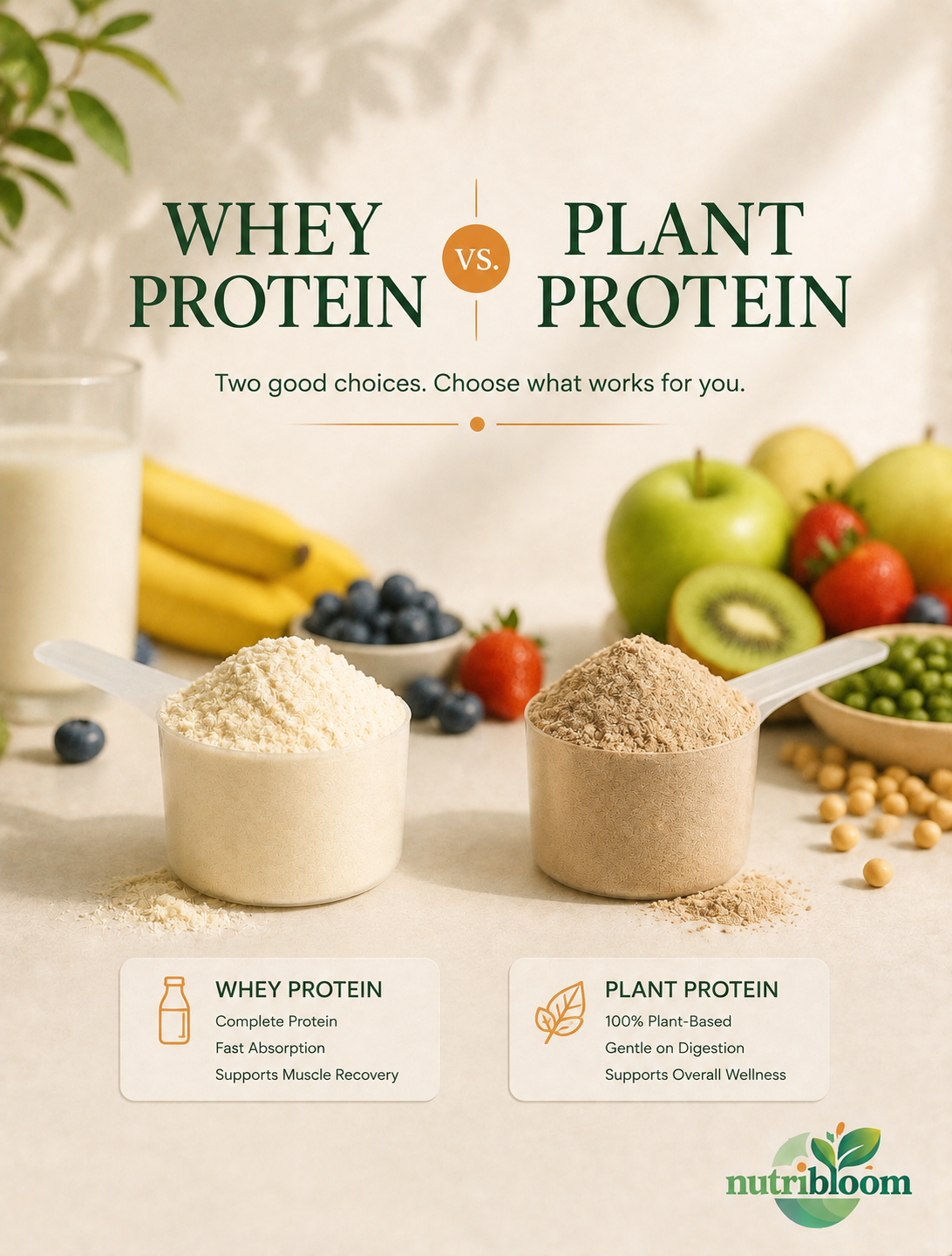
| Factor | Whey Protein | Plant Protein |
|---|---|---|
| Protein per serving | ~25g | ~20–27g (comparable) |
| Amino acid profile | Complete, naturally | Complete only when blended (pea + rice, or soy) |
| Leucine content | Higher (~2.5–2.8g per 25g) | Lower per source, but blends close the gap |
| Absorption speed | Fast (30–60 min) | Moderate (60–120 min) |
| Lactose | Yes (unless isolate) | Zero, fully dairy-free |
| Digestive comfort | Can cause bloating for some | Generally gentler on the stomach |
| Muscle building | Proven, gold standard | Comparable when total protein and leucine are matched |
| Best for | Dairy-tolerant women wanting fastest results | Vegans, lactose-intolerant, sensitive digestion |
What the research actually says
Multiple nutrition sources agree on a few core facts:
- Whey has an absorption edge. It digests fast, peaking in the bloodstream within 30–90 minutes, making it ideal for immediate post-workout recovery.
- Plant protein blends can match whey for muscle building when total protein intake and leucine thresholds are met, according to multiple comparative studies.
- Single-source plant proteins fall short alone. Straight pea or rice protein is incomplete, but pea+rice or soy+pea blends close this gap effectively.
- Plant protein has lower raw digestibility in whole-food form, but once processed into an isolate or concentrate, absorption becomes comparable to whey.
- A 2025 study specifically on women found 20g of whey and plant protein produced comparable metabolic and appetite responses post-exercise, addressing a research gap that mostly focused on men before.
The takeaway: for the average woman focused on general fitness, fat loss, and toning, both options work, and the “best” choice depends on your body and lifestyle.
When whey protein makes more sense
Choose whey if:
- You tolerate dairy well with no bloating or digestive discomfort.
- You want the fastest possible post-workout recovery, especially if you’re a serious lifter or athlete.
- You’re budget-conscious but active, since whey concentrate is often the most affordable complete-protein option per gram.
- You want proven, well-studied results with the most research backing behind it for muscle protein synthesis
When plant protein makes more sense
Choose plant protein if:
- You’re lactose intolerant or vegan — a significant portion of Indians fall into this category.
- You experience bloating or gas with whey, since plant blends are generally gentler on digestion.
- You manage PCOS, insulin sensitivity, or prefer lower processed dairy in your diet.
- You prioritize sustainability or prefer a fully plant-based lifestyle.
- You’re over 35 and want steady, sustained amino acid release rather than a fast spike.
How to decide: a simple 7-day test
If you’re still unsure, try this practical approach used by several nutrition experts:
- Days 1–3: Use whey isolate post-workout. Track digestion, energy, and recovery.
- Days 4–6: Switch to a plant protein blend between meals. Track satiety, taste, and bloating.
- Day 7: Compare how you felt on each, then commit to whichever your body responded to better.
- If you’re still undecided, some experts suggest whey on training days and plant protein on rest days for the first two weeks.
This removes guesswork and lets your own body decide, rather than following trends.
What to check on the label either way
Regardless of which type you pick:
- Protein per scoop should be around 20–25g.purenutrition+1
- Added sugar should be minimal.
- Leucine content matters for muscle building — look for at least 2.2–2.5g per serving if building muscle is a priority.
- Digestive enzymes (lactase for whey, protease for plant blends) can improve tolerance if you’re sensitive.
- Blend composition for plant protein — pea+rice or soy+pea is better than a single source alone.
Common myths to ignore
“Plant protein doesn’t work for building muscle.”
False when it’s a proper blend consumed in adequate amounts — studies show comparable muscle growth to whey when protein and leucine intake are matched.
“Whey is bad for women.”
Also false. Whey is safe and effective for most healthy women without dairy sensitivity, and remains the most research-backed option for fast recovery.
“You have to pick one forever.”
Not true. Many women use whey on heavy training days and plant protein on rest days, or switch seasonally based on digestion.
Final thoughts
There’s no universal winner between whey and plant protein — only the right choice for your body, digestion, and goals. If you tolerate dairy and want fast results, whey is a proven, affordable choice. If you’re vegan, lactose-sensitive, or prefer gentler digestion, a well-formulated plant blend delivers comparable results with consistent use.